

 Apple Podcasts
 Spotify
 Youtube Music
 A Farmer's Thanksgiving

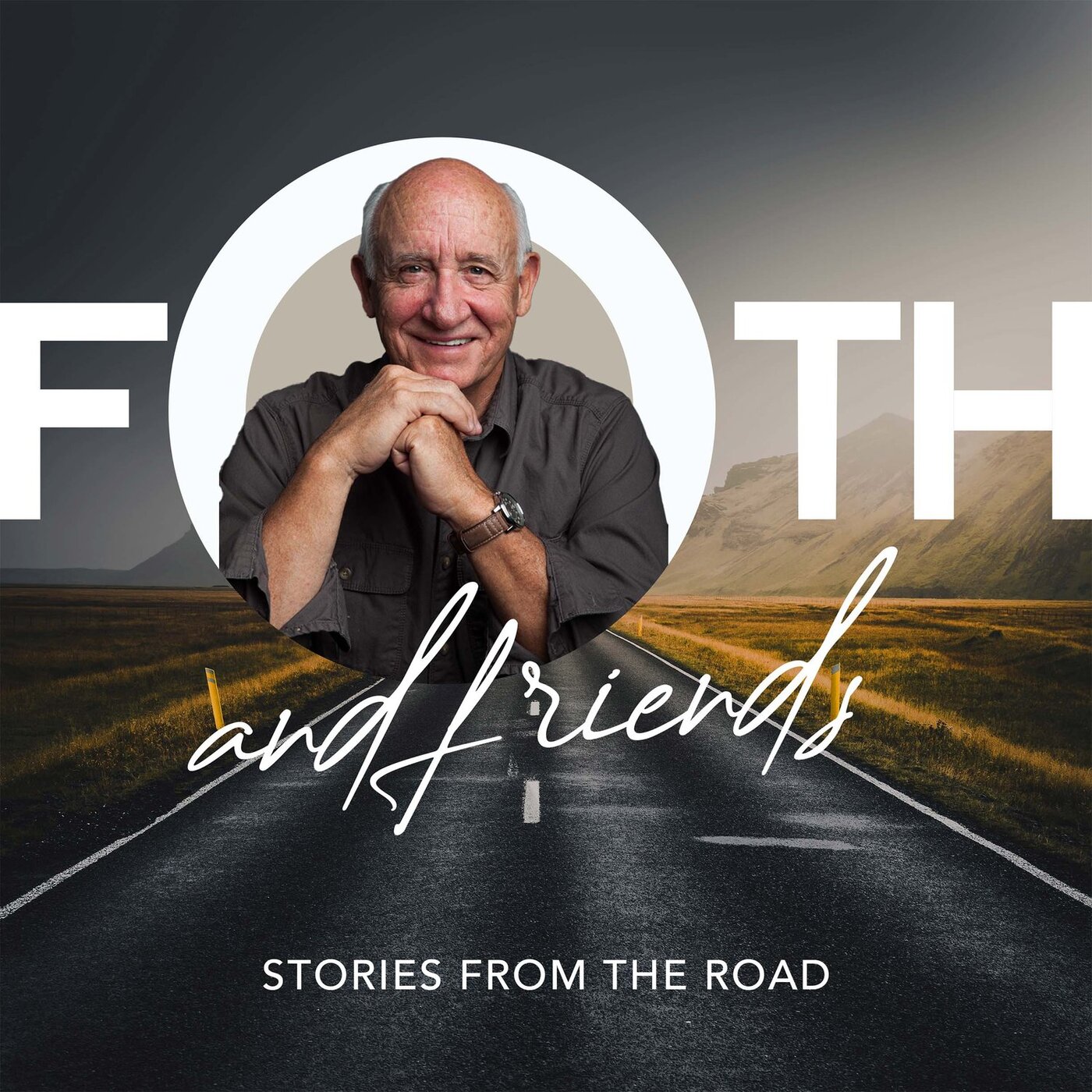
Hello, I'm Dick Foth, and I'd like to welcome you to known stories to make sense of it all. These stories are what I call walking books, real-life people, different places, different ages, different cultures, and I want to have some conversations with them across disciplines and generations and cultures in order to encourage a kind of knowing fresh lenses through which to see the world. One of those lenses will be Scripture, or more specifically, Jesus of Nazareth, whose life, I believe, changed the course of the history of the world. So thanks for listening in. Great to have you with us. Well, it's Thanksgiving week, and I wanted to just encourage you with both some readings and a great conversation that I had with a farmer friend back in Illinois a few weeks back. Let's start with part of a letter that the Apostle Paul wrote 2,000 years ago in the first century to a farming community in northern Greece, little town probably 10,000 to 15,000 people, was called Philippi. Listen to what he says in the last part of his letter. Don't worry about anything, instead pray about everything. Tell God what you need, and thank him for all he's done. Then you will experience God's peace which exceeds anything we can understand. His peace will guard your hearts and minds as you live in Christ Jesus. And now dear brothers and sisters, one final thing. Fix your thoughts on what is true, and honorable, and right, and pure, and lovely, and admirable. Think about things that are excellent and worthy of praise. Things to give thanks for. Back in October of 1863, October the 3rd to be precise, Abraham Lincoln, the president of the United States, right in the middle of the worst war we've ever experienced in terms of casualties, what we call the civil war, issued a proclamation regarding what we're going to do this week Thanksgiving week. Listen to what he says. I'm not going to read the entire thing, but the context is this brutal conflict that's going on. Washington, DC, October 3, 1863 by the president of the United States of America, a proclamation. The year that is drawing towards its close has been filled with the blessings of fruitful fields and helpful skies. To those bounties which are so constantly enjoyed that we are prone to forget the source from which they come, others have been added, which are of so extraordinary in nature that they cannot fail to penetrate and soften even the heart which is habitually insensible to the ever-watchful providence of Almighty God. He says some things about the war itself and then goes on to say this, population has steadily increased notwithstanding the waste that has been made in the camp, the siege and the battlefield. And the country rejoicing in the consciousness of augmented strength and vigor has permitted to expect continuance of years with large increase of freedom. No human counsel, hath devised nor hath any mortal hand, worked out these great things. They are the gracious gifts of the Most High God, who while dealing with us in anger for our sins, hath nevertheless remembered mercy. It has seemed to me, Lincoln goes on, fit and proper that they should be solemnly, reverently and gratefully acknowledged as with one heart and one voice by the whole American people. I do therefore invite my fellow citizens in every part of the United States and also those who are at sea and those who are so journeying in foreign lands to set apart and observe the last Thursday of November next as a day of thanksgiving and praise to our Beneficent Father who dwelleth in the heavens. So here I am in a unique place. I'm sitting at a farm table in a farm house with some farming friends and a couple of other folks, just a few miles south of Champaign, Urbana, Illinois. The property here has been in the warful family since 1882 and I'm sitting with Lynn Warful as my guest today, who is a farmer par excellence. I call him my renaissance farmer. He's a scientist, he's a board member of the Farm Bureau at a university staff. He's a poet and a thinker and he plows the dirt and he grows stuff. Thank you for being with me then. It's a pleasure, but you need to know we don't call it dirt anymore. It's soil. Well, that's the part of my education. They're both four letter words and they're good ones. They're in soil are different. So the thing I'd like to talk to you about this evening and we're coming on twilight here in Illinois in November, October, excuse me, late October. I just want to talk about the science of farming. I mean, you have been a farmer now for how long? I just finished harvesting my 55th crop. 55th crop and it's corn and soybeans. It's not it's not rutabaga and whatever. No, historically, we grew a lot of different kind of animals, cows and pigs and chickens and sheep, but we've gradually specialized more and more and settled just on corn and soybeans. How many kinds of products use corn or the or the stuff that comes from corn? Corn is actually fairly complex. There's there's the seed coat that is used for a number of things and after that it's basically protein and carbohydrate on oil. So corn oil is visible in the grocery stores as a vegetable oil and it's a fine vegetable oil. The protein is important in the diets of many of the people on the face of the earth today. It's a good protein, but one of the issues with corn is that there's too much carbohydrate. If you just eat corn, there's not enough protein, so you need more protein than you can get from the corn. It's the corn is used in hundreds of products besides cereal. Is it in my gas that I put my car? Actually, yes. We can use the carbohydrate part, the starch part, to make either sugar for high fructose corn sweetener or ethanol and that's a pretty good fuel. A lot of the corn today is divided into the different parts and the starchy part is used for fuel. Okay, so your harvesting things in corn and soybeans that touch the whole planet, I think I know this number, but you tell me how many people can one farmer feed? What's that metric? It's gone up substantially in my career. It is now one one American farmer feeds himself or herself in 155 other people. There you go. Yeah, it's amazing because right here in this area, historically, the first Americans, the ones we call Indians or Native Americans, they were just first. They was often starve because they were hungry. They hadn't enough food to eat to survive. Right. And so starvation was fairly common and now we're producing incredible amounts of food on the same land. So when I met you in the late 60s or early 70s, so that's almost 50 years ago, if my math is right, you were farming about 2000 acres with help here. Correct? Something like that. I started with 160 acres, went to 500 acres, eventually went to about a thousand acres and then to 2000 acres. Okay, now you're back to 640 plus or take a little bit, mostly by yourself. And I can do that with the large machinery. The productivity, the machinery has changed dramatically in my career. So tell our listeners, if you will, how long it took your grandpa to, well, just give us that little story about your grandpa. Well, great grandpa and my grandpa were really hard working guys and they could harvest a hundred bushels of corn in a really big day. They had to really work hard to be able to do that. Not all men could do a hundred bushels a day. How did they do that? By hand, they would grab an ear of corn and jerk it off the stock and throw it into a wagon. Over their shoulders, you say? Yeah, no looking, just tough. Well, there was a bangboard on the wagon and they knew that. So all they had to do was do a bank shot. I was going to say it sounds like a precursor to the NBA. Yeah, good training. So they could do a hundred bushels a day. The combine I have right now is just a medium sized combine. There are two sizes larger than mine. But on 800 acres mine is fine. It'll do about 1200 bushels an hour. 1200 bushels an hour compared to a hundred bushels a day. Blue shirt farmer. Shambray to be clear is a fabric well-known to farmers. Grandpa wore one every workday. I could picture him bucking bales, filling the barn hay-mow, a giant cavity, winter food for the cattle. I worked with him pulling millet. By hand of course, yield robbing grass, a million seeds, it choked the corn picker, plugged the snapping roll, sometimes mangled hands. He never cursed that I heard, but I wondered if he silently did. Blue shirt turned dark with his sweat. Oh, how he worked. Sun up to dark 30 in the fields. Before dawn, milking, feeding livestock, grandma's clotheslines were long. Her wash fluttered in summer breezes, winter washings froze stiff like us, but dried anyhow, somehow. Great grandma carried five gallon buckets of water. Monday was carry day. Tuesday, wash day. Too much work for one day. First grandma washed the lines, then had clothespins in her apron. I can still see her working, deeply satisfied, clean clothes on display, flapping in the breezes. Turning, she'd see her blue shirted farmer working, sorting cattle separating, some to sale, some to keep a good life. Came a sad day, grandpa's shirt changed. Blue chambray to white hospital gown. Soon to be an angel somewhere, unseen yet still present. The grandson in his blue work shirt, same fields, same work, till plant cultivate harvest, same sun, same stars, but no cows, no plows, no clothesline out back. Train still passed by just north. Perring diesels not chug chugging steamers, small box cars replaced by giant hopper bottoms, from 40 cars to 120 cars long. Corn and soy surge away, far away, distant lands receiving. From our farm to South Africa, white corn, yellow corn to Mexico, China, soybeans to Japan. Oh, how our world has changed, except the farmer wears blue shirts. So when we think of science and we think of agriculture, what are the big things you've seen in the last 30 years that have changed it, like, I know this part, like the GPS. Yes, guide your combat, right? Yes, that part of the computerization of agriculture and GPS technology is really neat and that allows us to collect terrific amounts of information and organize it and make sense out of it so that it's useful. It's not just the collection of data, it's useful data. And so, computerization since about 1980 has been really helpful. Like how does it help you? Just give me a little snippet. We can collect layers of information and then compare those layers. For example, we can take a soil sample every hundred feet in a field and then put that up on a map and have it in a digital form and that's one layer. And then we can, with our combine, with computerization, we're able to every hundred feet and effect take a sample of the productivity of that exact spot in that exact field and create another digital map and overlay those two maps and then see how the productivity of that specific spot is and then we can also do stuff like drainage work and overlay that with the other two layers and then we can overlay information from various hygrids and so we can overlay lots of solid data. When I first started farming, there was a whole lot of seed of the pants kind of stuff. Sure. So, you know, from experience and from my grandpa and so forth, we could make fairly good guesses about things but in today's world, computerization allows us to use data. Okay. So what? So what does that do for you? We get more and more efficient and more and more productive. So the productivity. So it gets bigger bang for the buck or bigger bang for the seed in this case? Yes. Yes. And so, whereas a hundred years ago, the United States did not export that much. Today, we export tremendous amounts of foodstuffs like corn and soybeans. You were talking to me earlier offline as it were about what I would consider microbiology, that is looking not at what grows up out of the ground but what is, in fact, in the ground. Just talk to me about that a little bit. Well, this is the most exciting part of my career. Not in the dirt. Right. Soil. You got it. We're learning here. With computerization, with genetics, the third area that's really exciting is what we're learning about microbes. 50-some years ago, when I was a college student, I studied five in the soil. We're now studying 10,000 in the soil, in plants, and in human beings. There's one billion microbes in one teaspoon of soil. The soil is so alive. That's phenomenal. That's why we can't call it dirt anymore, dick. We've got to call it soil. Thank you very much. And so we're constantly learning now, handover fist about microbes and how they interact with each other in the soil, in plants, and also in humans. The science there is really fascinating. And there's wonderful, very bright people in our universities and in companies studying microbes, handover fist, and discovering things. I'm getting old. I'm 76 now. And one of the things I've learned is that basically we discovered things. We don't invent things. The microbes have been here all the time. We're just now discovering them. Yeah, we're just opening those doors and it's phenomenal. Creation is absolutely phenomenal. So when you write, you don't sit down and write essays per say, you write with a felt marker, I think, a sharpie, on the inside of your combine window as you plow, or as the eye in the sky plows for you, whatever that is that's going on, where they turn on a dime and get straight rows and all that straight rows. Like, why do you write and what do you write on the windows of your combine? Well, my environment there, I'm spending 14, 16 hours in this little class house by myself. And after listening to the radio for so long, that gets kind of boring. So I'm thinking and I'm observing. I've seen the clouds and the sky and watching what's happening in the fields. And as I see all these things, I'm just inspired to reflect on them and to write about them. So initially, I just write my thoughts on the windows with the felt sharpie. And then I transpose those from the window to a laptop to the internet via email. So I read a couple of your pieces from your visit to Normandy in the summer of 2017. When I read about the farming, you're talking about the moisture in the morning and the sounds of the birds and the smell of the earth. And as a man of faith, of someone who believes Jesus is actually real, what does it do to your faith or for your faith when you do this day in and day out, both see it and write about it? Well, I have auto steer on the tractors and the combine with GPS technology, the tractor can steer itself on it in a straight line. So my hands don't need to be on the steering wheel. Yeah, it doesn't really want my hands on the steering wheel. So hands off so what do I do for 14 hours? I got to sit on that seat or the machine stops. Okay, so in my lifetime, everything I've studied, the more in-depth I study it, the more I see design, it's not just accidental. There's design so that things work. These microbes are working with each other. They're doing things. They're creating chemicals. They're creating chemistry. They're reacting to their environment. So the more I study that, the more I can see design, the more I see the weather, the more I see the crops, the more I see what happens when I produce food and it goes through our channels to people that are hungry and need food. The more I see, the invisible hand is really visible if you look hard enough. And it doesn't make any difference whether it's microbes or in the soil or something else. The designs are there. It's up to us to discover those designs. So the next time I'm driving through the country somewhere and I see some farmer plowing his field, there might be a decent chance that what I see is farming he's seeing is the fingerprints of God. Oh yeah. And it's pretty awesome. God is providing. And it's up to us to be good stewards of what he has provided. It's pretty clear that he wants us to take care of it and not to abuse it. He told us at the front end. Oh yeah, right off the bat. I'm giving this to you. Take care of it. That's your job. You take care of this. And the first job was as a gardener. Porticulture, right? Or a barista or whatever. Let me shift gears just a little bit more because we're running out of time here at least for this conversation. You've served on university boards, city councils or village councils. You've served on farm bureau boards. You've chaired numbers of them. You've served on statewide education boards. Church board, I don't know how many boards you've served on, but talk to me about the mindset because there's some people who are listening who are leaders of one kind of another or maybe don't even see themselves as leaders. But in fact, if they were to serve on a team or a committee or a board, their insights would be valuable. Tell me just a little bit about what kind of person does well in a board setting. And this is the first time you've heard this question for folks. I did not set this up. This is totally spontaneous. Sitting here, talking to me about that, just a minute. Well, core values have a great deal to do with it. And one of the early core values that I learned as a Christian was that the essence of the Bible message is that we are to invest ourselves in people and in things eternal. So the things eternal, we can study, we can read the Bible, we can associate with each other to worship the Lord as far as investing in people. How does one go about that? And if you study people and you see what their needs are, you can look at the structures that are in place, whether it's schools or business, the various different things in a community of social clubs like Rotary and Kiwanis and Lions and so forth, you can see how all these things can help people do better. And life is a long highway of mankind trying to do better. Hardly anybody starts out thinking how can I mess this up? It's how can we do this better? Sure. So if you study people and how to do things better, you can start to see that there are some structures that work much better than others. And that begins with the personal investment of investing yourself in people. After that, the structures that help everybody needs to have some understanding of fiduciary things, the legal and financial matters that all of us need to deal with. Fiduciary meaning you have something in trust. Yes, you have to care for it. Yes. And so it's good for people to take a turn, like those kind of things, maybe not do long-term, but take a turn and learn how this stuff works, whether it's a school board or whatever. We should all spend a little bit of our time, our days, helping these kinds of things. And then studying those structures and looking at what works and what works better. And then the next part of it that we need to really do a lot more conscious work on is the creative part that the creator created everything. And it's here for a reason. And how we work with it is important stuff. But how we organize ourselves to work with it is something that some people can do more easily than others. So when somebody sits on a board, participates in a board, not just sits on the board. They are in the process of organizing and effort, structuring things in a way to be more productive. Yes. Not unlike the efficiency and effectiveness that comes with science and farming. We're trying to organize things, understand things in a way that makes us productive. Yes. And ideas are really important. And there are things we can do to help ideas grow. If you're on a board, you can provide some ideas yourself and then put that out for discussion and for thinking and maybe for action. But coming up with ideas is an important part of being on a board. And then the rest of that is how do you work with the ideas that somebody else puts up? What comes naturally as stepping on the idea or stomping on the idea early? Yes. And so you kill creativity. So a good board member tries to encourage those who put forth an idea and consider that idea carefully and respectfully. Some ideas are going to work and some are not going to work. But each board member can help create an atmosphere of creativity that enhances and enables creativity. When I first became president of this little college in California, we had 35 board members. Somebody, because you never know at what level or weightiness an idea put on the table should be considered, right? I mean, you don't know. And this one fellow said, when you put a thought out there, why don't you use the one, two, three method that he had used in a different setting? One is I just thought of this idea and I'm putting it out there. So you can say it's not great. So that won't be offended. A two is I've really thought about this. I'm emotionally connected to it. Be very careful when you respond to it. And a three is God said it. Everybody get out of the table. So we had a deal one day and somebody sort of gave a monologue that was pretty heated. And one of the other fellows on the board said, Bob, he said, what, what was that? Because you could identify it. This is a 0.7 or a 1.2 or a 2. He said, what, what number was that? He said, he's, I was about a 1, a 1.3. He said, really, it sounded like a 2.8. Yes. So I think, I think the things that we do in concert, when Jesus says we're two or three are gathered, I show up. I think that in itself, maybe the most powerful number in the world, but this idea of doing things in concert together, whether it's all of the science from the scientists and the manufacturers that goes into making your, your job as a farmer so much more productive now than before, or whether it's sitting on a board, all of those things, all of those orchestrations, I think, profound expressions of what we're built for. And I've got to tell you, I always like coming to awful farms. I always like sitting at this table and eating the things that K made, which were chicken casserole and some strawberries. And what did you call that K? Panicada. Panicada, you need to get the recipe, folks. Just right in. No, don't. But anyway, it's been a good moment. Thank you, London. I appreciate you. Love you. And there's the phone and it's time to stop. Good night, all. See you. Bye-bye. Here on the Foodfield Prairie, we find fields of two-week, stubblebeards, cornstock remnants, stiff, short, soldiers, standing guard over mulched black soil, and soybean fields harvested, looking like earth carpet, cozy, blanketed against ice and snow. Frost meets still warm sunshine, early morning greetings of diamonds on grass, leaves carpeting yards instead of gracing trees. It's almost like a night camp before winter sleeves, growing darkness hours, clock games begin, fall back, wait for spring forward. Good night, sweet soil, from once I came and shall return.