

 Apple Podcasts
 Spotify
 Youtube Music
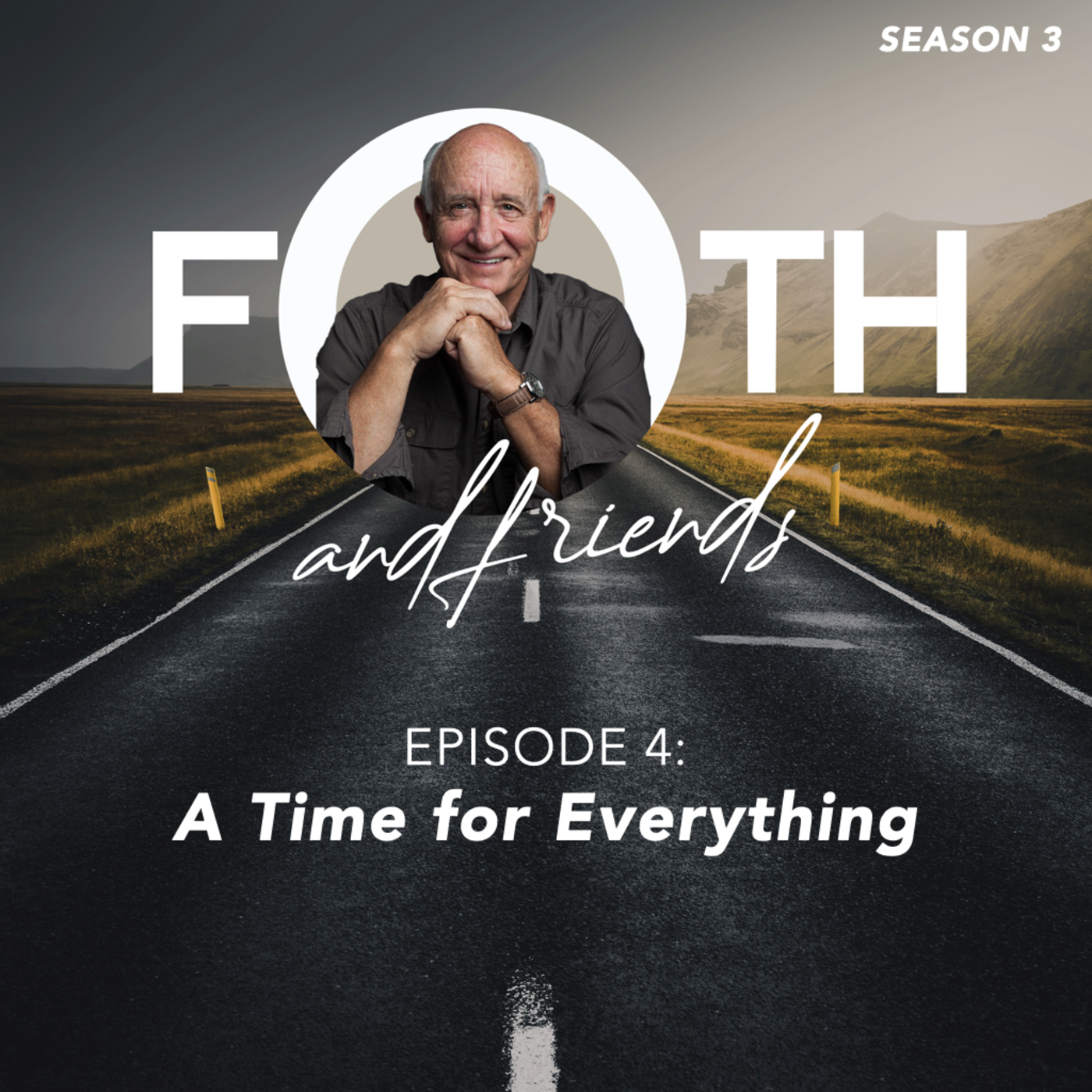
 A Time for Everything

Seasons
References:
Ecclesiastes 3:1-8
Psalm 91:1-2
It was the spring of 1972 and it was John F. Kennedy Airport in New York City and Ruth and I were on our way to Italy and England for our very first trip overseas as a married couple and we were going to a conference. It was called Adventure of Living and it started off with a bank. This is Dick Foth with stories from the road. Ruth and I were 29 years old. I would end up having my 30th birthday in Sereno, Italy. If you're going to have a 30th birthday have it in Sereno, Italy. I'm just saying. But what a shock. When we approached our gate, there at Kennedy, the nose of a huge plane was just feet from the plate glass. No passenger plane had ever come close to this plane in proportion. It was called Boeing 747, 747, a massive striking airplane that actually captured the public imagination and ended up bringing air travel to the masses, had a distinctive hump. Nicknamed Queen of the Skies is perhaps the most widely recognized commercial airplane ever built and that plane transformed air travel and really became a symbol of American ingenuity. Listen to this, six million parts it took to build that plane produced all over the world and it was an instant public sensation. It was much larger. This four-inch plane was much larger than any other and could fit hundreds of people in rows with up to ten seats across. Had an upper deck and up in that hump part reachable by a spiral staircase in that hosted a luxurious lounge. American Airlines had a piano bar installed in the main cabin. It was that big. The 747s were built in a factory in Everett, Washington generally regarded as the world's largest building by volume. But that brand new plane, I think it was just they just started building him at 68, 1968. The days of that 747 were numbered. Two weeks ago on January 31st Boeing handed over the last 747. It'll ever make. On that day the final one was delivered to its new owner. That plane was number 1547. Now granted that plane will still be flying decades from now and that's that longevity aviation historians say is a testament to the work that engineers and designers and others put into repeatedly remaking the airplane. Through every sort of season they as they kept moving and making more airplanes they adjusted and changed and worked on it, tweaked it if you will. Oh just one more piece of information before we stop talking about airplanes. There are two new airplanes that have been built but not delivered and these are no ordinary planes. These are two new US presidential planes which are technically called VC25, Victor Charlie 25. We would know them as Air Force One. That's a call sign but it's only used when the US President is actually on board the aircraft. These two future Air Force ones, though already produced, are currently undergoing extensive programs of modifications and all of the hardware and fancy cyberspace stuff that goes on. The point is about the 747. Everything has a season. Everything has a time. We're in the middle of feeling that now. I mean since December 21st we've been inching toward a new season. Just last time I talked to you about Poxytunney fell in Pennsylvania and Groundhog Day and all of that because February 2nd is the halfway point between the winter solstice and that next season will change in March 21st but at least and I love this at least the days are getting longer. I mean literally by minutes each day the sun rises and sets well to be precise planet earth turns but we gain one or two or three or more minutes until we get to June 21st. Actually things we gained less minutes when we get to May and I knew you'd want to know that. We are all aware of the passing of time and seasons. So what about them? One of the language of the Old West. If we glance down our back trails it's interesting to reflect on one's seasons. Think about it. That first season pre-school up to age 5 then you have elementary school just using the educational cycle as sort of a metric. There's middle school, that's an interesting time. High school the great social season. They're all seasons. We graduate high school and then we go perhaps into the workforce we go some would go into the military some into college or university and then we finished with that season however long it might be. We used to joke when I was in college work that it's a four year curriculum but some of us stretch it to seven or eight. It's all right and then there that decade called your 20s and another one called your 30s and the 40s each one's sort of a season not precise but in relationally we have seasons so we can be single or married a parent a grandparent even a great-grandparent. Anybody remember the season before the internet back in the 90s in the mid 90s? Before the internet you had to go to an authority figure for information really that was the structure but since the internet that that was the first generation that did not have to go to an authority figure for information. Remember the time prior to the smartphones in that first decade of the 2000s? Anybody remembers my favorite line? Anybody remember number two pencils and daytime planners? Well back in a moment. In the scriptures in the Hebrew scriptures what we would call the Old Testament there's a passage in Ecclesiastes that talks about time and it just lists the various things that the author of this reflected on. Listen to how it reads chapter three of Ecclesiastes there is a time for everything and a season for every activity under the heavens. Time to be born, time to die, time to plant and the time to uproot, time to kill and the time to heal, time to tear down and the time to build, the time to weep and a time to laugh, time to mourn and a time to dance, time to scatter stones and a time to gather them, a time to embrace and a time to refrain from embracing, a time to search and a time to give up, a time to keep and a time to throw away. It goes just on and on like a time to love in a time to hate, a time for war and a time for peace. I think he is reflecting on what he has seen. I think he's reflecting on that part of life that just introduces us to things that in some cases that we hoped we would never see or experience. So my question is this, what season, what time in quotes do you find yourself in as you listen to this podcast? Like what age season are you in? Physical season, emotional season, how about educational or vocational? How about the season when you have a certain level and kind of responsibilities or a season when you're reflecting on what possibilities there are? I would submit that seasons are sort of like classrooms or maybe even more specifically teachers for good or ill. Some years ago when I turned 71 years old, I did a life plan. That's where you sit down with somebody for a couple of days and they listen to your story and they distill things and look at gifts and experiences and weaknesses and all of that sort of thing. When I woke up that morning to go and start that two-day process with a facilitator, Ruth was chuckling and I said, what are you laughing at? And she said, I think it's hilarious that a 71-year-old man wants to do a life plan. I said, hey, hey, my mom lived to 100. I got 30 years out here. I need to get my act together. So what was interesting is that the facilitator listens to all this and then about a day into it or a day and a half into it, he asked you to leave the room or she asked you to leave the room for 45 minutes or so. And when you come back, your life is on the wall in butcher paper and it's been charted with high points called life gates or other points called turning points ups and downs and sideways. And when I looked at it, I saw that the age for me from 21 to 35 was like an entrepreneurial season. I graduated from college, married a wonderful woman in Ruth started having children, got a master's degree, moved from places, went from California to Illinois, started traveling in the United States and other places around the world. And in the middle of it all, in the middle of that season, my parents split up after 29 years of marriage. Now I was in my 20s, albeit, but still it impacts you and it impacted how I saw myself, my identity. I had the sense that things would never be the same and sure enough they weren't. But my real question was how do I navigate this? I can't change them, but how do I navigate it in myself? On reflection, I learned a ton from that season, pain and all. So another question, what's the season from which you have learned most? Or the season that you'd like to see again? Maybe it's that one. Or the season that you never want to see again. I'm fond of saying life is what happens when we expected something else. Here's the third question, what in this season are you learning that might help you down the road or someone else for that matter? What in this season are you learning that might help you down the road? So I'll just I just like to give you a little encouragement along the way and read again from Psalm 91 that we shared a few weeks back. Whoever dwells in the shelter of the most high will rest in the shadow of the Almighty. I will say of the Lord, he is my refuge and my fortress, my God, into my trust. The seasons will come and go, but I believe that that God will not come and go, that he is always the same. And when we find refuge and a place to stand in him, that gives us a place to see the world from. God bless, thanks for being here. Dick Faud saying, I'm out. I'll catch you next time. Have a wonderful week, God bless.