

 Apple Podcasts
 Spotify
 Youtube Music
 An Unexpected Life

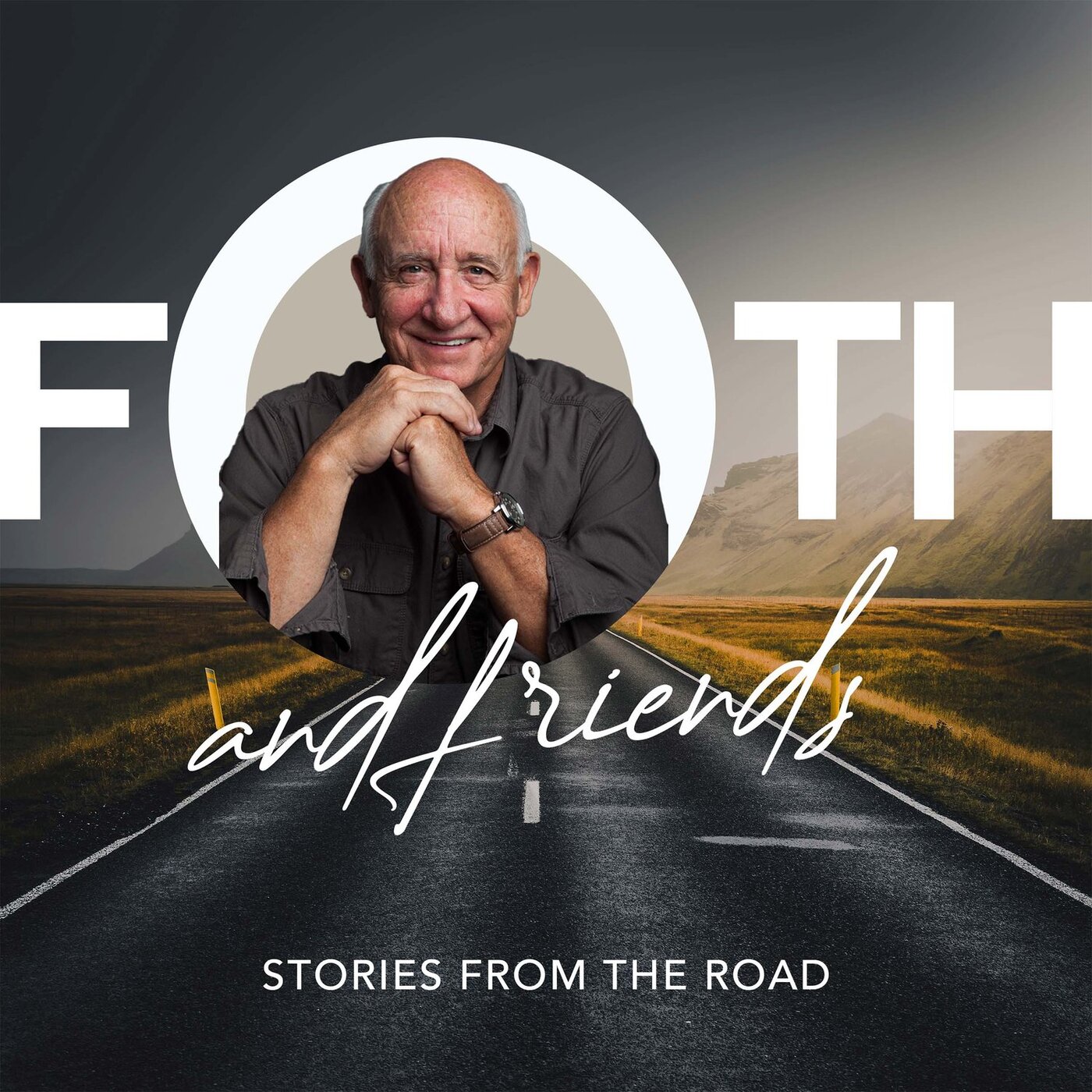
Hello, I'm Dick Foth, and welcome to Known Stories to Make Sense of It All. You say that's a bit of an audacious claim, stories to make sense of it all. How are you going to do that? I think by listening to the story of an individual, it puts skin on truth, and it informs our own lives. So these podcasts are about those kinds of conversations and reflections, and the hope is that as we explore other people's worlds and journeys, we get help for our own. At the heart of it all, we want to engage the story of Jesus of Nazareth, to get perspective, actually, for how life really works. Thanks for tuning in, let's do this. You know, it's a rare moment these days that in our culture, we get to have a conversation with someone who has a life trajectory that embodies not just the American dream, but anyone's dream. This is a story of a man from rural beginnings in South Texas who pursued a course of interest and study that brought him to the halls of academia, and ultimately national and international prominence in his chosen field, agricultural sciences. In short, that's about food. There's a global view of the need for adequate food resources. This is how he says it, I believe that production of food, fiber, and fuel through agriculture is an honorable profession, fundamental to human existence, and that meeting the needs of the expanding global population is essential to survival and prosperity in our human species. After all his achievements over the last 50 years, there shines a wonderful combination of keen intellect, engaging personality, and a humble spirit. His name is Dr. Bob Easter, and I want you to meet him. My friend today is my guest, is Bob Easter, and we're sitting in Champaign, Illinois, 135 miles south of Chicago, and Bob is great to have you with me. Well, it's nice to see you again, it's good to be here, you know, thanks. I detect in you, and this is a setup. I detect in you a slight Texas accent. I can't escape it better, as hard as I try. Tell me where you were born and brought in. This is my standard question, where are you from originally? I was born in San Antonio, Texas, actually, but it was the nearest hospital to our little town, 100 miles west, almost to the border with Mexico, okay? Well, that's where I grew up, in a town of about 750 people, majority Latino, so I speak bad Spanish fluently as a result of that, and it had a good little school, so I had the good fortune of growing up in a school with a lot of opportunity. We're all in the band, we all played sports, we all did everything. So I had those opportunities, and then attended a community college for two years locally, and the area had been developed early 1900, because there was water, if you drill a whale, water just bubble out on the surface, and my family had moved there for Missouri, and what they didn't realize was that was a little geologic pocket of water, and once it was used up, it was dry, and so by the 1960s, my dad was seeing the future, and he would say to me, Bob, you've got to get an education. He was a farmer, farm manager for an investor, and he said, you've got an education, because there's not going to be a future here, and I was good advice, I never had a guilt about not going back home, so I went from there to Texas A&M, and did two degrees there, and my first was actually an agricultural education, and I've been very much impacted by my high school ag teacher, occasional agriculture, and I thought I wanted to do that, and in my senior year, and I went in to pick up my term project, I, the person who taught pork production, which was that course, said, if you ever thought of going to graduate school, and I thought, well, what does that mean? From my background, graduate school was what school teachers did to get a raise, right? The masters, and he explained to me, knowing involves research, and so I decided to stay with him, did a master's there, and towards the end of that program, there was a speaker from the University of Illinois on the campus in my field, and animal nutrition, specifically swine nutrition, and wine nutrition, and I feed pigs, lopping hogs, pig farmer, well, it's a little more sophisticated, and he said, would you be interested in coming to the University of Illinois to do a doctor with me, and so I did, and as I finished up, I had two options, one was to go back to Texas A&M where I had an offer, and by chance, the second was to stay at the University of Illinois, and my heart said you got to go back to Texas, once in Texas, and you never heard of it. My wife, some Missouri, we had met at Texas A&M, and she's much more logical, and she said, you got to stay where the hogs are, so for the next 40 odd years, I stayed at the University of Illinois. She's from the show, and he stays. That's right. Well, the person that you came to work under at that time was Dr. David Bigg, who's a mutual friend now gone on, but he went to the National Academy of Sciences. He did later. He did. He was one of the very few agricultural scientists that has been made a member of the National Academy. Truly remarkable individual. And especially, wasn't especially amino acid? Which is a sub-discipline of nutrition, and he really changed the world in many respects. So he deserved very much his right. I had the pleasure of being in the National Academy when he was in the field. Oh, well. That was quite a day. He did. He would try to explain to me what he did, and I would just nod and say, well, that's amazing. Didn't have a clue. Well, he was a truly remarkable individual, not just as a scientist, but also as a very spiritual individual, a very diverse, of enormous integrity. So you came here to study a research in swine nutrition, which is correct. You ended up being an administrator head of the ag sciences area, or the new... After 20 years, I became head of my home department, animal science, and then five years later, I was asked to be dean of the College of Agriculture, Consumer and Environmental Sciences, the AgSchool. And I did that for eight years, and there was... I announced my retirement, and I was asked to stay on for a few months to be the interim provost to that position was filled. And there was... For our listeners, what's a provost? The provost is the senior academic officer on a campus, and usually the number two person in terms of campus... On the local campus. And the individual who has a responsibility for budget, typically, which... So like what's the budget when you were... We were just a bit north of a billion dollars. A billion dollars. On this campus. How many students on this campus? This campus then had about 40,000, I think this year, that's increasing. That's up close to 40,000, a billion dollar budget, and you grew up on a pig farm. Okay, this is good. I did that for five months. There was an un-series of unfortunate and untimely retirement, and I was asked to stay on to be the chancellor of the campus as an interim. So what's the chancellor? Chancellor is the senior... He's in charge of the campus. University of Illinois is a system, there are three campuses. So the chancellor is responsible for the flagship or brand-of-shamping campus. And I insisted throughout that process that I was going to retire. At the end of two years, they had located very capable, ready to be the chancellor, and I happily retired. And then five months later, the person who had been hard to be the system president resigned. I was asked to return as the president of the three-campus system with about 80,000 students about a billion dollar budget. It was interesting. I had my wife and I on some farmway in North of town, and we were out once afternoon picking up a few rocks out of a waterway that our daughter could use to build a fire pit in the back of their home. I get this call on the cell phone, and Chris Kennedy, who's father was Bobby Kennedy, was more chair, and he said, hey, Bob, what are you doing? I said, well, I'm picking up rocks, and his response was a very long pause. And I think going through his mind as I'm beginning to ask, I'm going to ask this person to be the president of the University of Illinois, and then on a Sunday afternoon, he's picking up rocks. So I... I did not be his best move. Yeah, it's fine as that. That's right. So we had the conversation a couple of days later, and I said, well, Chris is six months through, he said, now you've got to stay at least two or three years because we want things to stabilize, and for whatever reason they thought I guess it was, it could help with that. So I spent three years as president, and then retired, and was replaced by a very capable individual. How long ago was that? Over two years ago. So it's recent. I might have been doing it well, that's correct, it's yesterday, yeah. Well, it seems like it, but when I read the local paper, I'm just glad that I don't have to go to that office. You know, there's always budget issues, there's always other kinds of things to deal with, so... But I've had a, for me, a totally unexpected life. And what has been truly unique is that, and I think about this, I've actually never applied for a job. Wow. Dave Baker asked me to come to Illinois for a PhD, invited me to. I was invited to go on the faculty here. I was asked by my faculty service department head. I was asked by the provost to be the dean, and these other stories I've told. And it's as though there's a doors open, of course a lot of doors open, but there's been a sense that this is the one to walk through. And so you begin to ask, is there a plan? Is this all coincidental? And one would argue probably is, but then there may be that it's not. And you're a person that has, that is a man of faith that can put it that way. You can. How does, so when you say play, and I'm thinking, God's design and all that, how did you navigate, if that's the right word, the scientific structure, the scientific methodologies, all of the things that come into play on any university campus? How did that work? How did people see? Because I know a lot of settings, but people who are very good at what they do, but are people of faith are sometimes maybe often discounted. So how did it deal with that? I guess in, in part, the colleges of agriculture historically have drawn from typically rural communities from the faculty, and there's, I think, and in my case, I was surrounded largely by people of faith. So it made that much, I have colleagues in other parts of this campus, and other campuses who had a more of a challenge in that area. I guess for me, maybe I'm really old fashioned, but if you go back and think of the people who did a lot of the very early science in the 17, 1800s when the Western world was really opening up to this, after the Renaissance science, scientific method, they saw, and many of them were clergymen. They saw their role as expanding the understanding of God's creation, and I think of science in that way. There's a world out there that has been created, and my role was to just get a little better insight into how it all works. So it's been a very interesting journey, and I've been very comfortable in that doing that. I have a friend who's now gone, you may have known him, at the university who was one of the top analysts of the campus in the world. He was a spectroscopist when they had a Dr. Howard mom's dead. I know who, yeah, I didn't know him personally. There's actually a book about him, which I've read. Howard was a dear friend. We've traveled to India together, we've done all kinds of, and especially was light, use of light, scientific measurement, and when he won the Fisher Award, which was American Chemical Society, I think he was the second or third recipient, he had a big gala at the Americana Hotel in New York City, back to ideal, and he gave a speech at the end. They hadn't done a symposium, given speeches, and at the end he gave a speech, and then he just said, you know, all of my life, I've been studying God's creations, and six years ago, some number, six years ago, I discovered God, and all that I am, and everything to be, is because of this Jesus, because of this God, and he took off his lava layer and put it down, and the whole assembly came to their feet in a standing ovation, and I came back and told David Bacon this, and David said, I've never heard of that, and I just don't stand up here for something, but that statement, that willingness to speak of God, is a powerful thing, how do you encourage students, undergrad, grad, how do you encourage students to walk out life and faith? You know, I think within the public university system and the world we're in, overt, proselyzing, if I could use that word, it's just something you don't do, so I think you do it through your lifestyle, and you know, the life you live, and hopefully they see a reflection of Christ in your life, you know. Change your skill, you know, if you're, if you're only an okay, and not a, not a person who works at it, and so forth, well, they don't last for a long time, you know, I've always said this about the University of Illinois, and you can say that I may probably been brainwashed by being here my whole career in some sense, but it does have an environment, department by department, that allows pretty mediocre people like me to do things they couldn't do to other places, and don't go too far with that notion of it. This is going around the world, but don't let that bother you. That's what a great thought. I think, let me just ask this, and this is a conversation more than I know of you, I think you've seen generations now of young people come through. I had the privilege of being a college president of small college, church related college, which is nothing compared to what you've done, but watching students come through, do, have students changed, or to what degree have you seen students change? Over the last 20 years, let's say, since the coming of the internet, just using that is sort of a place. If you want to go back to when I arrived here, was it to height, if you had not more, just towards the end of it? Yeah, I remember that. There was a great deal of rebellion against just about anything. 5,000 National Guard troops in campus, but I remember that. But the students have changed a lot since then. I think there's a level of, we hear a lot in the media about intolerance, but there's also a level of tolerance that's present that's there. You refer to the coming of the internet, and it's having a profound influence on every dimension of our lives, and the academy is no different. The ability to use that technology and the extent to which students are using it for learning opportunities, and then social relationships and so forth has profoundly changed the kind of the world that we live in. I still give some lectures in my old pork production class, and it's now, and for years, I used overheads, and I wrote on them with a pen, and today, there's, I think, a dozen or so TV screens around the wall. There are tables with movable chairs or own wheels, and most of the clients doesn't even look at me. They're looking at the television screen on the wall that's closest to them, and it's just a completely different environment. But the interest in learning, the passion of the students is just as strong as it ever was. This university, like many, has changed a great deal demographically early, and hasn't been that many years ago, and almost everyone in my class would have been from Illinois, right, if not from a farm, some Illinois. And today, it's a very international campus. Demographically, the ethnic backgrounds, the faith backgrounds, the diversity is much different from what it was. You know, and I guess the thing that we find ourselves every 20 years or so reinventing ourselves, and that's a good thing, it's healthy, but it is a reality, and so I guess one of the things that I've come away from that is that it's not a bad thing, it's not nothing something to be feared, but it is something you have to be aware of, and to the extent that you have a responsibility for guiding fault is people reinvent the institution, that's a role to fight. Just two or three things, and I'll get out of your hair, and you can go back to picking up rocks on them. As I've talked to people, there are a couple of folks who knew I was going to come and chat with you. One of the words that I've heard used about you is that you are a unifier, that you have the capacity. And I think my friend Lynn, my Renaissance farmer friend Lynn, who is sitting in the room with us at the script, used that phrase or that word to describe you in unity or unifying capacity, in a university setting, that's no small deal, that's a big deal. Tell me about that. What is it in Bob Easter's head or heart that allows you to do that? I guess I had a variety of things, and I appreciate that thing that's said, because I hear it being said to me, and for whatever reason that's who I am, I guess I had low expectations of myself, so my ego, coming from where I did, I don't have a great ego to do it, unfortunately, or at least I don't think I do. But in all there's a verse in Micah that talks about what does the Lord expect to me, and it's to do justice, to love mercy, and to walk humbly with the Lord. And that's basically the path I've tried to follow. And if that helps bring people together, then that's a good thing. That's tremendous. That's just great. The university campus is both a wonderful learning environment, and often the battle around of ideas. For faculty and administrators, the matter of how one expresses faith, could often be a slow dance through a minefield. Bob Easter found a colleague that did that well when he met Dr. Steve Sample, president of the University of Southern California from 1991 to 2010. It's interesting that when he resigned, so many folks commented on Steve Sample's quality as the leader of a really international institution. This is John Mork, chairman of the board of the University of Southern California. Dr. Sample engineered arguably the most dramatic rise in quality and ranking of any American university from the very start he understood the entrepreneurial zeal of USC and fueled art desire to be excellent. If there were a tagline for his leadership style, it would be never let up. And the results for nothing short of spectacular. Some years ago, somebody gave me a copy of a book that Dr. Sample had written, and it's called The Guide to Contrary and Leadership. It's a small book, but it has a powerful punch, and I encourage you to pick it up. The Guide to Contrary and Leadership. But I think the way he approaches life could best be summed up in the commencement address that he, President Steve Sample, gave at USC the year he stepped down 2010. And I won't read it all to you, because I want to get back to Dr. Easter. But this shapes the way someone like him and I believe Dr. Easter thinks this was given on May 14, 2010, and he entitled it three questions. I'm not going to read it all, but I want to excerpt it. You may be wondering how I got to be this year's commencement speaker. Doesn't mean that everyone else to whom we offered this honor turned us down. No, it doesn't mean that at all. At USC, we have a committee that chooses our commencement speaker. This committee receives advice from people across the campus about potential speakers. But the final choice is made by the committee. And this committee consists of one person, me, the president. Since this is my last commencement, this president of USC, lots of people suggested that I should be the speaker. I referred this suggestion to the committee of one and low and behold, it passed muster. He goes on to say, I don't wish to focus on your professional or political developments in this commencement address. Rather, I want to talk to you about your personal development as human beings. That's because in the final analysis, what determines a person's ultimate success is not so much his professional abilities or political brilliance as it is his character. What I should like to do is pose three questions, the answers to which only you can formulate. Moreover, I hope to persuade you that these three questions underlie many of the more complicated issues which you will have to address during your lifetime. The first of my questions is, how do you feel about money? He goes on to say, the question I'm asking here is not how should you feel about money, but how do you feel about money? And then he explains some of the things that he has observed over the years. His conclusion is this, if a person can discover early on how he feels about money, he will be able to address many of life's choices in a more definitive and satisfying way. My second question, he says, is a bit peculiar. It is prompted by my concern that in an insidious sort of way, America is mistreating his children. So my second question to you is this, how do you feel about children? Both those you will someday call your own and those of your neighbors as well. He expands on that by saying, is there another industrialized nation that subjects its children to such high levels of violence at home, at school, and on the streets as ours does? Is there another industrialized nation which has given its public school system as little attention as we have? All of you graduating this morning are fortunate to have attended good schools and an outstanding university, and yet here we are, one of the wealthiest nations in history, and we, within our borders, we have within our borders some of the worst elementary and secondary schools in the world. Indeed, for all Americans, our greatest single challenge in the years ahead will be the reconstruction of our society into one that is user-friendly to children. My third question is the most difficult with the three, and by far the most personal and embarrassing. No, has nothing to do with sex. Rather, the question is, how do you feel about God? Say what? God? Did he say God? Why should anyone bring up God at a secular commencement ceremony? Surely most of us, as modern intellectuals, have grown beyond the point at which God or our relationship to him is a serious question? Let me assure you that I am not trying to sell you a set of religious beliefs. Here again, as in the case of money, the question is not, how should you feel about God, but how do you feel about God, in fact? He goes on to expand on that, and then it concludes this way. One of mankind's deepest and most abiding concerns for all times in all places and for all peoples is our feeling for and relationship with God. My point is that you may be able to run from your true feelings about God or non-God, but it's very difficult to hide from them in the long term. Probably just your advantage to discover and confront those feelings sooner rather than later. Well, there you have my small contribution to all the parting advice you will receive as you graduate from the University of Southern California. Just three simple questions. How do you feel about money? How do you feel about children? How do you feel about God? I do believe, giving careful consideration to these three questions in the years ahead will approve beneficial to you. For in so doing, you will learn a great deal about yourself. You may even come to like and accept yourself a little better. You will almost certainly gain a better understanding of the meaning of life, of your place in the universe, and of how you might live in productive peace and harmony with your fellow human beings. And that, after all, is what living well is all about. God bless you and fight on. I was delighted to receive this commencement address from Dr. Easter when he said to me, let me illustrate what I mean about Steve Sample. That was great. You brought up Dr. Steve Sample, who is the former president of USC, and you were contacting him for what reason? Well, he's no lamb, and he's had a successful career, I should say, he had, because he had, sadly, he's passed. But the one of the roles of a president is to visit with the lambs, and suggest that they might make a contribution. What's that all line about, presidents or guys, who are men or women who live in big houses in the bank? I've not heard that one, but it's a good one. But I did get a couple of chances to meet with Dr. Sample, he's a wonderful guy, provided great leadership to USC for a long time, while close to 20 years, I think. Your career has impacted a boatload of people to put it, to understate it by any measure. And to see what I would see, from my perspective, see the hand of the Lord on Bob Easter, from Pigs in Texas to leading one of the premier universities in the world, and not losing your way, or not being sucked in by the bright lights, or crushed by the weight of it, because there's no small part. It's just an honor to be able to sit with you. Well, you know, this may seem trite, but I've had the good fortune, I'm a weak person, you know, we're all susceptible to things, but I've had around me individuals, my whole career, who've been incredibly supportive, and people of deep faith. And I think that's been part of the reason I've been able to do anything that I've done. So we don't do it alone. I absolutely agree. We all know that the greatest of leaders don't leave alone. They always have able and loyal friends who advise and encourage and challenge along the way. For those who are married, most often, that closest guy is a spouse. For Dr. Easter, it is his wife, Cheryl. You know, it's important to you pair yourself with going through life, and I had the good fortune to meet Cheryl a long time ago, and she's a person of great faith, and that's been tremendously helpful to me while we're like, you know, I think we don't understand a lot of times how powerful it is to have someone who is not only supportive, but also dreams the dream in some way, and they help us from getting fatheaded when people say isn't it? You can wonder. It's really important. Sometimes I'll speak, and it goes pretty good, and somebody who comes, it must be wonderful to be married. She'll say, honey, let me talk. Okay, well, Bob, thank you very much, and I just think the encouragement that your life and your excellence in what you do, your capacity to bring people together. I think that mica versus tremendous for just as a template, isn't it, for things? It's just a great model for us and really honored. I have one last question. It's not a deep question. Ruth and I would do conferences every once in a while, and one of my questions I'd like to ask is what did you do for fun as a kid? I asked this question once in Virginia, and a lovely blonde lady in the front row raised her hand and said, I rode pigs. I said, really, I'm from Oakland, California, and that doesn't fit you, and I said, how do you ride a pig? She said, I was brought up in Iowa, and what you do is you get up on a trough, and you don't want one of those 400-pound styles to just add a litter, because they're mean, jump on their back, and you grab their ears, and off you go. And the crowd, we had about 200, they just start laughing. And I said, just for fun, anybody else here ever ride a pig, and like five guys came out of the closet. So, I'm just, just my question for President Emeritus of the University of Illinois. Do you ever ride a pig, Bob? This is going to disappoint you, but I'm not ridden of you. Oh, no. I only think close to that, having grown up in South Texas, you're a cowboy, I mean, that's true. Oh, sure. And I decided one, one fine day that I would bring the hogs in with a horse, and I learned that pigs don't hurt like cattle. I wouldn't, that didn't lead me to try riding one of me, either. Well, you know, I just want you to know, this is a piece of information you probably didn't pick up, but there's a whole fraternity and sorority of Swine City's anonymous around the world. I've asked this question all over the world, and there's always something like that. So, you know, I learned something new every day. So, you know, Johnny Carson and Edmund Mann used to have the big challenge, what smarter a pig or a horse would you say? Well, the pig is. The pig is. Yeah. Yeah. I think that's too much. That would be great. Dr. Bob Easter, President Emeritus of the University of Illinois, I'm grateful for your life, for your wisdom, for your time with us. And I think there are some folks out there who are encouraged because of what you've said and how you've spoken today, and I'm grateful, thank you. So as we wrap up this podcast, I go back to our title, an unexpected life. That title is a positive truth. That Bob Easter story is a profoundly fruitful account of the tenacity of a man and the faithfulness of God. The words that Bob quoted from the prophet, Mike, are worth hearing one more time and take into heart. Like a 6-8, he has told you, oh man, what is good and what does the Lord require of you except to be just and to love kindness and to walk humbly with your God? So be it.