

 Apple Podcasts
 Spotify
 Youtube Music
 Christmas Through a Child’s Eyes (Reprise)
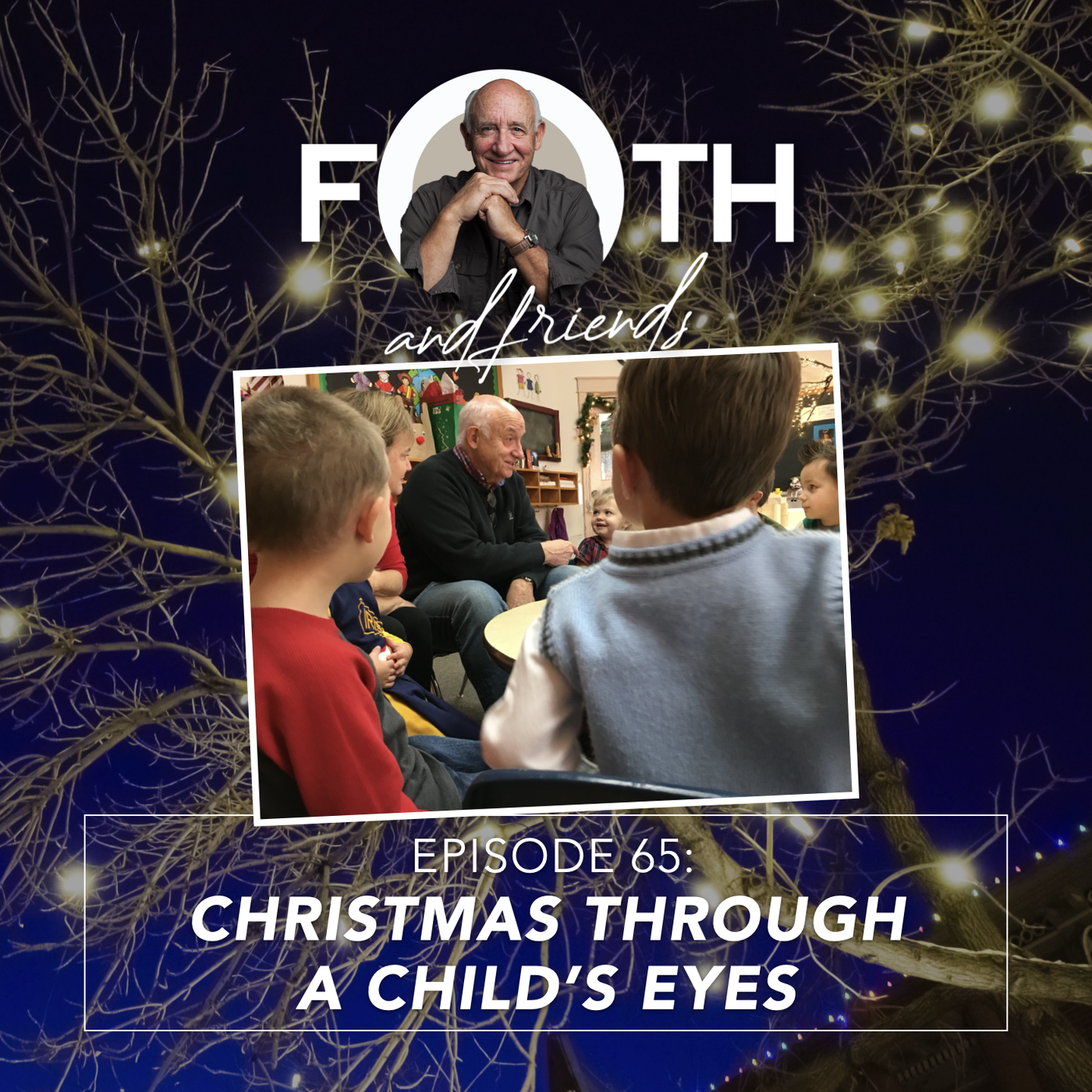
In this Advent reprise, Dick Foth invites listeners to slow down and experience Christmas through one of the most honest and wonder-filled perspectives imaginable: the eyes of a child.
Recorded at Harmony Early Childhood Center, this episode blends thoughtful conversation with preschool teacher Barb Melby and delightful, unscripted moments with three- and four-year-olds as they talk about Christmas, gifts, Jesus’ birth, angels, stars, and songs.
Through laughter, innocence, and unexpected wisdom, Dick reflects on how children experience the Christmas story—not as theology, but as lived imagination. The episode becomes a gentle reminder that Advent isn’t just about understanding the story, but entering it with curiosity, joy, and openness.
As the voices of children sing familiar carols, Dick closes with a blessing for the season—inviting listeners to welcome light into darkness and rediscover the meaning of Christmas with fresh eyes.
PODCAST NOTES
Themes
-
Advent and the coming of the Christ child
-
Faith seen through innocence and imagination
-
Childhood development and storytelling
-
The power of wonder, play, and creativity
-
Learning generosity and gratitude
-
Entering the Christmas story rather than explaining it
Key Voices
-
Dick Foth – Host and storyteller
-
Barb Melby – Preschool teacher with 25 years of experience
-
Preschool children (ages 3–4) – Honest, joyful reflections on Christmas
Key Ideas
-
Children live in a world where imagination and reality often overlap
-
Storytelling helps children make sense of their world
-
Christmas is learned not just through instruction, but through experience
-
Generosity and gratitude are learned behaviors
-
Innocence offers insight adults often forget
Memorable Moments
-
Children explaining Christmas in their own words
-
Conversations about gifts, giving, and Jesus’ birthday
-
A child redefining the Christmas story through play
-
Preschoolers singing Away in a Manger and Go Tell It on the Mountain
-
Dick’s reflection on the unmatched beauty of a four-year-old choir
Closing Reflection
Advent invites us to welcome light into darkness—and children remind us how to do that naturally, with joy and openness.
Hello friends, Dick Voth here. It's Advent season, focusing around the coming of the Christ child. We're in two or three weeks of reprise podcasts, just ones that we had liked over the years, and this week we're going to be talking about seeing Advent through the eyes of a child. And there's something about that. Of course, you have the Christ child, but when little kids think about this, it's a fascinating thing. And some years back, I had a chance to sit with a group of four-year-olds mostly and just have a conversation. It's one of my favorite podcasts. So here we go. And by the way, our second audio book, Stories I Love to Tell Volume 2, with University students primarily, is out and about on most platforms and soon to be out on Audible as well. Thanks for listening. Bye-bye. So here I am sitting on a very low chair in a lovely room for preschoolers at Harmony Early Childhood Center, commonly known as Harmony School, and I'm here with my friend, Barb Melby, who teaches preschoolers and have for the last 25 years. So Barb, you could have done a lot of things, and I've known you for a number of years. You could have done a lot of things, but you chose at least for these past 25 years to teach preschoolers. Why? Well, I got into teaching largely because I loved teaching this age to my own children. This was a fun age for my family. Not only enjoy this part of the awakening of a little child's mind and experiences in life, but I also wanted to be on their school schedule. So I started off into school because I wanted to be off in the summers, and at Christmas when my family was off. And as I got into teaching, I realized that this three to four-year-old range is really ideal. It's just a perfect time where kids, everything's new, everything's an introduction to wonderful experiences, wonderful opportunities, and there's not a lot of testing and school readiness that you have to worry about. It's a lot of developmental kind of experiences that we get to introduce to them. It's a great time to be involved with families. A lot of parents are starting off on this new child-rearing thing, and they want to be reassured that their kids are doing great, and that they're doing a good job of being parents. So I get a chance to be there at that stage and say, look how what a wonderful job your child is doing of growing up and learning. And so that's rewarding for me as well to be involved with them. So a child's brain between three and five huge developmental stages. In just the cognitive stuff, the experiential things, life is a series of firsts. Can you see a difference generally between a three-year-old and a four-year-old in terms of what they can do, and we don't need to get into a class and develop skills, but what are some of the differences? Well, I think they're learning a lot at this stage to use both sides of their brain at the same time. And they're also learning to incorporate all their senses at one time, and that's why you see differences in kids at this age. Some kids do that quicker than others, and some of them, they all have areas where they're kind of gifted, where they're do things naturally. Some kids are very relationship-oriented, and they get that relationship piece down really quickly. They make friends easily. Other kids are a little bit more cognitive, and they love the puzzle of things. They love the puzzle of what else the alphabet is and stuff. And so they really tend to have areas where they have strengths, and then other areas where they just need time to figure it all out. How about art? So in art, they go from a whole range of things, but most kids start at two and a half, three years old, where they're still sort of scribbling, and they're making arms and legs come out of a circle for the head. The head, the body, everything is one circle, and then they get arms and legs, and pretty soon they realize that that's not what I look like. My arms don't come out of my head, so I have to start drawing a body, and I have fingers, and I have eyelashes, and so they start adding all the details, and that's when it's really great to see what of those details is important to them, which is some of them really go for all the decorations on their clothes, and other kids want to make themselves either really tall, or they want to make themselves doing funny faces. So it's great to have the child's personality come out in that. I took a class in developmental psych one time, way back in the dark ages, and if I remember correctly, four and five-year-olds this age group, they, of course, they all love stories, but the difference between what is real and what's not real, what we would call fanciful and real, it's sometimes there's no line there, it's all one world, right? Which is why the Christmas story in itself gets to be a little challenging, because we talk a lot in our classroom about what is pretend and what's real when it comes to certain stories, but we certainly want them to enlarge their imagination, because that's what helps them to eventually in their life learn to hope, learn to dream, learn to anticipate, is that you have an ability to think of things that you can't see right now, and so those types of developmental opportunities where they get a chance to learn to be creative and learn to be imaginative are really important at this age, but you don't want them to live in that world either, you want them to understand, begin to understand that difference between the real and the not real. It's great to, they also think very literally, they think I had a little girl one time, very concrete, this one little girl, her cousin came and was talking to her about school and said, well, what does your teacher look like? And she says, well, I don't know, because she wears clothes. And yes, well, he did ask that question, and so they do, they have to such a one nobody yet has told them not to think like that, so they have a wonderful ability to put those kinds and their experiences together, what's happened in their own families or what's happened when they travel, they incorporate that into their play. You know, this podcast is about stories to make sense of it all, a study show that a two-year-old will start telling their own stories, and that's sometimes how they explain their worlds, and as they age, and how they maybe manage their worlds, if they're in a difficult kind of situation. Yes, yeah. So I was just here watching your class share gifts, because we're here in, what's this December 19th, and they were sharing gifts, and several of the kids who brought gifts wanted to have that gift for them. They wanted to keep it. I thought to myself, well, that's how I am. I buy things I like and give them to other people. I'd like to get this, or I buy a give it to you. It's exactly the way we are, and that's a sure thing. They were going to walk up to this whole table of presence wrapped, and the only one they knew what was inside was the one they brought. So why not choose that one? Yes. So it was a huge exercise in self-discipline today. It's the first time they've ever had to exchange a gift, come in and actually open something that they have no idea what it is, and then say thank you, even when it might not be something that's their favorite, something that they already have at home. And so we talk a lot about how we thank people that we thank the people for the gift, even if the gift is not what we expected. But we thank people for what they've done for us. So some of those things were introducing the thought to them, that this is the way we function and the way you can bless other people's lives. And up until then, this point, it's kind of been about them. So we're sort of introducing those ideas that we can do things that make people feel better. It was very interesting to me that you had the table with all the gifts on it, and some of them were pretty large and some were smaller, but when the kids walked it, because they could just go pick up a gift, right, for boys and girls, and I thought that they might go for the big ones. We've always thought that it doesn't have that. But it doesn't. Why do you any thought? No, and we have no idea. In fact, the one girl gift that was left for the girl who wasn't here was the biggest one there. And so they, some of them look at the wrapping paper, and if they see that there's Snoopy on the wrapping paper, then maybe there's Snoopy inside. Or some of them like things that are shiny. Some of them have an idea of a shape of a package, but some of them, like my little friend, Urban, he just, he really, you know, loved his, loves his friend Weston, and he wanted Weston's present. And Weston had some time during the day, had pointed it out. So we love that. That's great. Yeah. So we've talked to the teacher. Now let's talk to the kids. See what they have to say about life and Christmas. I am sitting with a group of four-year-old friends. Are you all four? Okay, we got three. Couple of three. Okay. Okay, so we're going to go around the circle. I'm going to point at you, you say your name. Okay. Flakey, twisting, bourbon, Alice, Samara, A3, Andrew, River, Elizabeth, Lily, Barb. And Dick. So here we are. I'm sitting here with Mrs. Melby, who's your teacher in this class. And we want to just ask some questions about Christmas. I even wrote them down on a card just a little bit. So I'm just going to toss one out. So here's the first question. What is the best thing about Christmas? You get the open presents. Presence. You get the open presents. Two for presents. Yes, River. Well, there you go. Okay. So we've got presents. We've got Jesus' work. So do you like getting presents? Yeah, yeah. Yeah, yeah. Oh, you did. Yes. I got a ferry. And I got an Elsa doll. And I got a Transformer. Tremendous. Do you like? I got a Transformer too. You did. Me too. Wow. Do you like giving presents? Yeah. Do you like giving presents as much as getting presents? That's a hard question, isn't it? I don't like doing presents. I don't like doing presents. You go again. You like getting it. Okay. So well, this is somebody's birthday. And I'm so glad that you're giving presents to each other because it's my birthday. It's my birthday, right? No, it's my birthday. Jesus' birthday. Wow. So like, is he here in the United States? Yeah, no. Where was he born? Anybody? No, no, I'm in the major. Okay, one is a time. Bethlehem, Bethlehem. Okay, so we've got, he was born in a stable in Bethlehem in a major. What's a major? It's a bed. It's a bed. It's a place actually where cows would get their food, right? They would, and so they made a little bed for Jesus there. What's inside the manger? Maybe. Do you know that? Do you know the song? Away in the manger? We've talked about that, haven't we? I have my dad sing that to me one night. Do you know what? Do you know that song? Is there any song that they might know? Well, we know a lot of songs from our Christmas program. I don't know what, but I made a new song. Okay. Yeah. And boys and girls, why was Jesus, why did they put Jesus in the manger and the hay? How come they stayed in the stable? He can't, there's no back. There's no back. No way, where? No room in the inn. Like the inn in the old days was like a hotel, you know, and they didn't have any, didn't have any rooms. Yeah. My question is, do you know who Jesus' mother was? What how about his dad? And did they have a long walk before they got to Bethlehem? Yeah. What a long way. How come they came to Bethlehem? Maybe it was more. Well, how come they didn't stay home and have their baby? Cause they're a little bed. Huh? There's no bed. You don't remember why they had to come to Bethlehem? How did Mary get there? Cause no bed. A donkey. Did the donkey bring Mary? How come they didn't drive a car? Because they don't have any cars. And no roads. And no roads? So they just had to walk. Bethlehem just drove. Mm-hmm. And those are the new flags. The dog's name was Boaz. And they could use the bulldozer. They could use a bulldozer. Yeah. They had a star movie and Mary and Joseph made a bulldozer. It's a new movie. It's a new movie. Oh, okay. So what was in the sky? Ah, a star. There was a star in the sky. And what is a star? It was God's special time. It's a sign. Well, this is wonderful and these are great answers. And tell them what you were dressed up like. Perfect for a class day. Yeah. What did you wear you dressed up like? You were sheep, weren't you? But some of you were something else. What were you, what were you going to be, Eloise? Oh, they were playing this day. You missed it, why? But she was going to be an angel. What are angels? There was a star. No, what are angels? Oh, I know. Are they a messenger? Yes. Uh, they're a messenger. They're a messenger. And what was their message? What do you think they said? A baby. Maybe Mary could have a baby and they're going to name it Jesus. That's exactly right. And then did they sing? Were there a lot of them? What did they sing? Glory to God, the highest. They did. They did. That's great. They had a wonderful party they were so excited for. Why miss it? Well, before I go, how about if I sang you a song? Should I do that? Uh. Or is that too scary? Yeah, yeah. You know this song? Oh, wait, in a minute. Yes. No crib for a bed. The bed for Jesus laid down just three years. The stars in that sky look down, where the stars see the dead. The leaves are more Jesus, cross the tree on the bed. There's something about a four-year-old choir that has whimsy to it. It has a kind of innocence that just makes it fun and fun is what you get when you work with preschoolers. They, the way they see the world, how they respond to things. So I asked Barb just to tell us a funny story, maybe a funny Christmas story from all these years and she picked one out. Well, one of my personal stories, because it was my granddaughter, she came into my classroom and was playing with the set that we have and it has a main dress table with a main juror and it has all the wise men and our particular set has a little in and the in has beds on the top and it's a little Fisher Price set that came from years ago and she had heard the story of Christmas over and over again. So she had gone through the whole process of when Mary and Joseph got to the inn that the innkeeper said, I have no room and she was saying this to herself as she marched the people across the table and she said, I have no room and she got to the inn, the little play set and she saw these two beds on top and she said, oh, look, I found you room and so in her mind, the story was solved, we didn't even have to go to the table. But I love that part of their imagination that they can actually enter into a story and then change it and go different directions with things and we had a little boy today who was dropping his star into his ornament as we went through the whole Christmas program and he informed us that that was the death star because he had just seen Star Wars. Yes, so we love just including our whole life in the Christmas story, yeah, it's great. That's great. Will Barmelby, thank you for what you and your colleagues do, not just to shape kids but to shape the country and ultimately shape the world. Thanks a million. You're welcome. You can't think of a better way to end this Christmas podcast than to have the kids sing to us one more time and say goodbye. What a fun time. Well, here we are back in 2021 and I was just thinking I had no clue what an angel choir sounded like in the skies over Bethlehem. I know it scares the Bajeevers out of the shepherds but I have a feeling that it's hard to beat a choir of four-year-olds belting out, go tell it on the mountain. Well, as we come to this Christmas day in just a few days, I pray that your insight into what it means to invite light into darkness, to be bathed in it if you will, will be something that becomes very real if it's not already. And I pray that in this coming year, 2022, that your understanding of who God is through Jesus Christ will be very, very real. So the not only is transformative for us, for you, for me, but for those around us as well. Thanks a million for listening in for subscribing and this is Dick Fothe signing off at the end of 2021 and I'll catch you in the New Year. God bless.