

 Apple Podcasts
 Spotify
 Youtube Music
 GOLF: A Metaphor for Life

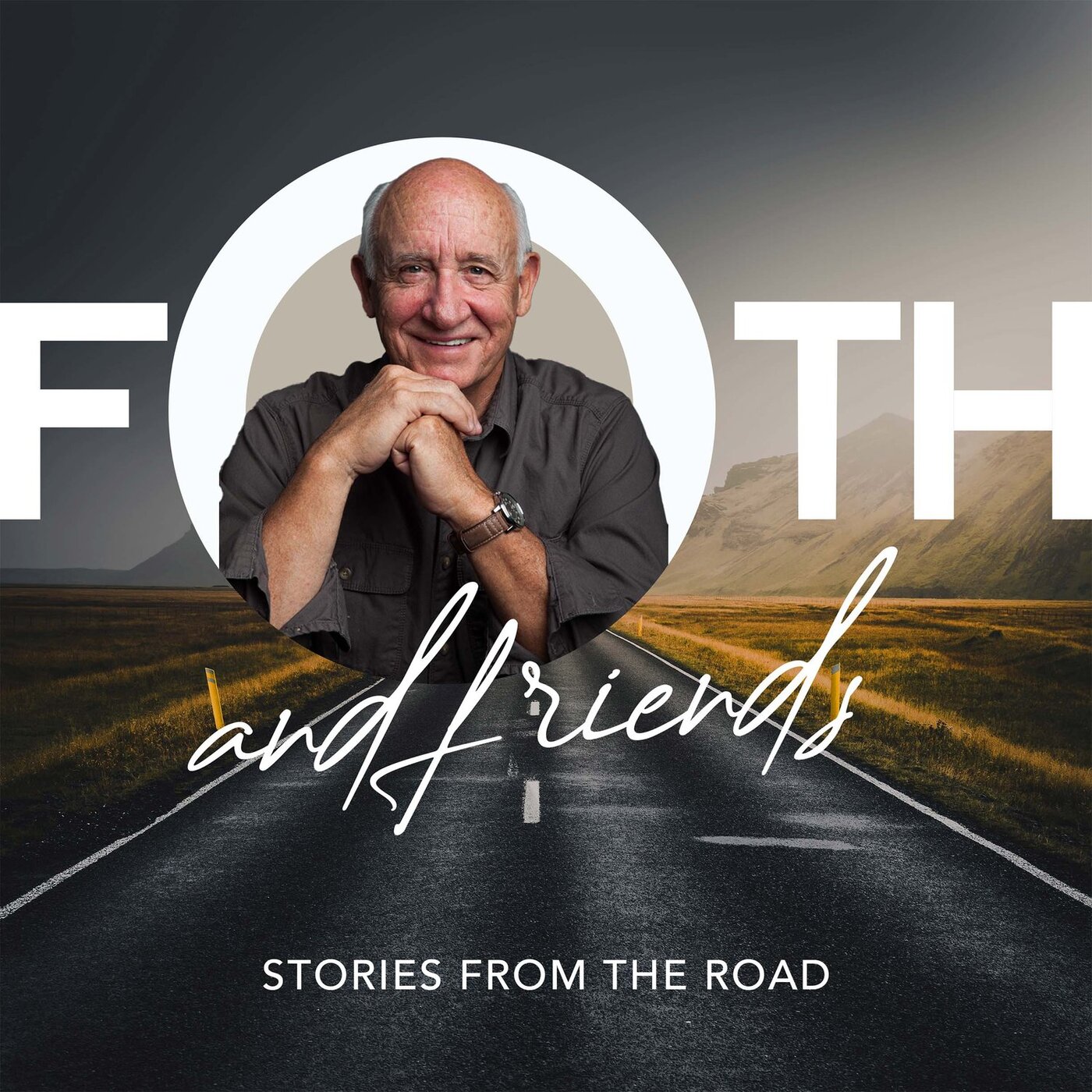
Hello, I'm Dick Foth, and welcome to Known Stories to Make Sense of It All. You say that's a bit of an audacious claim, stories to make sense of it all. How are you going to do that? I think by listening to the story of an individual, it puts skin on truth and it informs our own lives. So these podcasts are about those kinds of conversations and reflections, and the hope is that as we explore other people's worlds and journeys, we get help for our own. At the heart of it all, we want to engage the story of Jesus of Nazareth to get perspective, actually, for how life really works. Thanks for tuning in. Let's do this. We're just coming into September. It's football season, and it's the wrapping up of a different season, not quite as popular, but interesting to some. It's called golf. There's a thing called the FedEx Cup. It's after the regular golfing PGA events, and there's big money at the end of it, and there are a whole range of reasons why professional golfers like to play in it. It's an honor to do it. Golf's an interesting word, first used back, well, before Columbus sailed west, 1457. I think some speculate that the word golf, G-O-U-L-F, is a Scott word, Scott's word for strike or to cuff. And what I do is that I tend to swipe at the ball and strike the ground when I try golfing. But nevertheless, much has been written about it. Someone famously said that golf was a good walk spoiled. But in this podcast, I want to talk about golf as a metaphor for life. And to help me with that, I chatted well over a year ago now with a young friend. He's young to me. I met him when he was a college student from Sacramento, California. He's actually Rockland near Sacramento. His name is Greg Farrington, and I'd like you to meet him. You grew up on the peninsula south of San Francisco, Burling game. Burling game, little suburb of San Francisco, beautiful little town. A lot of places to play golf. Not too far from Stanford University. Half hour, maybe. Yeah, 25 minutes. How old were you when you start playing golf? Probably 13. My dad had those typical clubs in the garage that was collecting dust. And I went out to a driving range one day. I said, I think I can do this. And that's where it started for me. And you were on your high school golf team? Yeah, that's played competitive before I went on and played competitive in junior college. But our high school team did not lose a golf match in four years. Wow, significant. We were good. Yeah. And one of your teammates had a had a well known name. Yes. Being Crosby's son, Nathaniel Crosby was the best player on our team. He went on to win the US amateur. So you're very good, very good. Just as a point of reference, in 1978, I was chosen as president of a small college near Santa Cruz, California, Bethany was the name of the school. And I went there and met Greg. He was a new student. So I'm this young college president came to a small. You had hair, a lot more hair. And I was slim. I was dapper. It was unbelievable. Yeah, the transformation from there to here is incredible. It's frightening. But you were the starting point guard on our basketball team did a fine job. Actually, what led me, I don't know if you know this, what led me to Bethany was golf. You didn't have a golf team. No, he didn't. But golf had so consumed my life. And my goal was to be a professional golfer. Really? That it became an addiction. And so I had one of those moments where I felt like God says it's going to be me or golf. You choose. And I chose God. And I put golf clubs in a closet for four years at Bethany. And I played basketball for you. Really? Yes. Is there. So, you know, God or golf sounds like title of a good book. I could write something like that or golf is God. And laugh though, we may golf is a tremendously challenging sport. So I just asked Greg to sort of explain not sort of to explain how this works. I watch golfers hit this tiny ball off the planet earth. And they they land it within three feet of the whole. It's amazing. So just you non golfers out there that are listening. Here's what a golf course looks like. The place you hit from. What do you call that? That's the tea block. Okay. So that you've got the tea. You tea the ball up on a little piece of wood and you're plastic and you hit it down into this moan area. Call the fairway. Call the fairway. Well, you don't really get to the fairway. You know, I hit short, but that's not this is not about me. There's rough. There's rough around the fairway. So the longer grass or gorse or whatever it is wherever you're playing is on the edges. And if you're playing, if you're playing in Florida, you got to watch out for the gators. Yes. And if you're in Arizona, you got to watch out for the snake. So you want to keep it on the fairway. Keep it on the fairway. And then the place you land has this little hole and it's it's called the putting green. It's the breath. It's really tightly mo to grass and run smoothly. So there you're not striking the ball in the same way that you're hitting it with your fairway woods or your irons. So theory and principles of a golfer great, but in actuality, it's a very personal game. Everybody plays it differently. And so I just asked for a little insight from Greg with regard to my own game. We've been working with your golf swing this weekend. Yeah, we fabulous. And so we've talked about this. And I'm thinking it all starts with what you're doing with your hands, right? Okay, it starts. You got to hold something. Right. And so you're holding a club that's how you grip a club is probably the most important thing in a golf swing. So you can't strangle the club. You got to hold it in the right position. That will determine how your ball will travel. So there's so many different metaphors for that. How are you holding life? Are you strangling life? Are you holding it loosely? We just attended a memorial service for a good friend of ours, right? And he was a person who I think held life loosely. He enjoyed life. He was a blessing to people. And life gave back to him. And so if you're holding the club correctly, it's going to deliver the right amount of force to the ball. And the ball is going to travel where you want it to go. And I think if you hold your life in a way that will allow you to have enough control over it, it'll take you where you need to go. So I read golf digest. Right. And it says, you know, I'm learning all these things, you know, and it says you need to have one swing thought. Don't have a negative thought. Like don't hit it in the rough. You don't do that. You have one swing. My swing thought is kill that sucker. No, I told you don't lunge. Don't do that. Do not lunge. Do not strangle the club. But it's so counterintuitive. I mean, it's it's you would think to make something go farther. You tighten your arms, you clench your teeth and what hit it? It doesn't never works. It never works. It never works. It's got to be tension free. So how do you how do you do life tension free? What's that? I mean, well, you're a businessman and you come home from work. And if your life is full of tension, right, not going to go well with the with the wife. Yes, not going to go well with the kids. Right. So you have to allow that, you know, the Bible says Jesus said cast all your cares on me. Right. So to me, that is saying I don't have to hold on that tight trust trust in the Lord in all your ways and he will direct your path. The ball will go straight. So I think there is a giving over control and say, you know, I'm going to surrender life. And I don't have to control it. Grab it as hard as I can. It was it was interesting yesterday because our friend, Dr. Brian Newton, who passed away, he had a favorite verse from Jeremiah. Yes. What was that? 29 11 Jeremiah. I know the plans I have for you says the Lord. Plans not to harm you, but to give you a hope and a future. Isn't that great? Yeah. So, so that larger perspective is at least a baseline or is a baseline for helping us not strangle life. We were just chatting. I don't think I've ever said the phrase the what's a baseline for helping us not strangle life. But I was fascinated and pleased actually by Greg's response golf is the ultimate game of trust. You have to trust. And so once you have picked your alignment and you've grabbed the club, you have to swing. And the ball will go where you lined it up to go. If you allow the club to do the work. And so even you're strangling it and when you're holding it, you're going to manipulate the club and the club is not going to do the job that was created to do. There's this other part of golf besides trust, which is called truth. Or to phrase it a different way, it's a game of honor. There are no umpires or referees per se, except if you get in a jam and they can sort of figure out what needs to happen. But you're in the place of penalizing yourself if you make a mistake. If you're going to penalize yourself, if you're in a hazard or you touch the ball too soon or move it when you're starting to swing, you have to call the penalty on yourself. What's that about? Well, you know, I try to be a Christian man. There's sometimes I go, I wonder. I say, it's my opponent really looking. I'll move that ball to closer on the putting green. They'll never see. I think integrity isn't that something that's missing in our culture. That is a game of integrity. You know, it's not what I can get away with, but it's playing within the context of the rules and being a gentleman, it's called a gentleman sport, right? Being a gentleman or being a man of honor and saying, you know, I will obey the rules and it really demands character to do that. I have a friend in DC. It was a good golfer. Golfed all of his life up into his 80s. And he said, when you take a Mulligan, which is, you know, you take an extra tee shot, it doesn't count on your scorecard and when you're playing socially with friends, sometimes you do one Mulligan per nine holes. The golf is 18 chances, essentially, right? I mean, 18 opportunities, games within the larger game. And he said, so if you take a Mulligan or if you move the ball to a better line, so forth, it's still a fun deal. It's still enjoyable. You're with your friends. What it's not, however, is golf. It's at something else. So we've talked about how we grip the club. Let's not strangle life. We've talked about integrity, how we play within the rules, because that's what makes it the game. What's next? Your feet have to be firmly planted. You can't have your feet move around in a golf swing. Right. Now they're rotating them that, but it's not like you're, you know, they're staying in place. You have to have a good foundation. And when you have that foundation that's not exaggerated where it's too wide or too narrow, but when it's supporting your weight, then you can swing in the proper swing plane and deliver the right amount of, you know, force to the ball. But you got to have a stance in life, don't you? I mean, you got to believe that's what the scripture says is that we ought to stand there for. And so standing in the right way in golf is essential to hitting a great golf shot. And I believe your stance in life is essential to living a life that is something that you, what we will be saying maybe, are proud of. You know, living in such a way that people will respect you by how you stand, you know, and that goes back to the integrity issue. Yeah, so stance is important because you're, how you set your feet down will determine the alignment of your body. Because because your body really is a whole lever. Yeah, you're swinging with your, so my shoulders will line up with my feet. And that's going to be the line that my, my ball takes. That's where I'm aiming. So your feet dictate the direction. And that's, that's true in life. Your feet, how you travel a path will determine your direction. Okay, what else? Well, one thing we've been working with you. Well, there's more than one. Let's not make this personal. There's more, there's more, there's got to be more than one, but follow through follow through. Now there, you watch a golf tournament. There are a hundred different swings. Yeah, you got Jim Fury, who loops it. You got Ricky Fowler, who's got a very flat swing. You got a traditional swing. Like, you know, Jordan, Steve, there's all kinds of different swings. Right. You have a different swing than I do. Very much. Your ball actually goes forward. But one thing that you will see with all these swings is they will finish in the same position. They, they all finish in the same position. And so that has to do with follow through. And it's not really how you get to the ball is after the ball. How you going to finish? Because if you stop at the ball, which I've been trying to tell you, it's going to go right or left. It may not, it might just dribble off the tee or what. But if you're following through all the way through. It's going to give the ball the greatest amount of velocity off of the club face. And so I think follow through in life is something that's missing in our culture. We start things, but we don't finish them. And we start relationships, but we don't finish them. We have kids. And we call ourselves parents, but we don't finish the job. We change careers all the time. But that's okay. Change in career. Well, you did. Well, yeah. Look, Ryan, that's an old guy. I say changing, changing, you know, things get tough in one job. I'm just going to jump to the next. Okay, so it's starting something, but he gets tough and I don't stay with it. There's no follow through. You know, it's interesting. I was talking to some business leaders the other day and have the privilege of sitting with the numbers of folks across the country. And we were chatting about what we looked for in someone that we hired, whether it was as a college president, somebody we brought on board, one of the key things that I look for. I think this is true is the capacity to finish what you start or follow through with communication or follow through with wrapping up whatever it is. It's a huge, it's a huge piece of life. Yeah, and I don't see. And this is not being continuing because I think it's our culture that promotes this. A commitment to the end. You know, our friend, Barry Newton, five kids and 16 grandchildren and 57 years of married. And he was a man of commitment and he followed through. Yeah, praying was a big deal for him, prayed for his kids and his dad Monday Tuesday Wednesday Thursday Friday. It wasn't fun being in the service, but each adult child in their own 40s and early 50s, they knew which day their dad prayed by a sequence of age. So one was saying, I'm Tuesday, no one's, I'm Friday. That was fabulous moment. Yes, and what follow through? What commitment, right? I mean, it's one thing to have the idea. I'm going to pray for my kids on these days of the week. It's another thing to do it for 57 years. Yeah, it was interesting because Barry was vice president of finance with me at the college for seven years. And he was a great no-taker. He'd be recording stuff, writing, speaking, into his thing, into his recorder. But I would always get minutes or action steps, next steps from him so that we could keep the trajectory going in the right way. Follow through. Follow through. Follow through. If that's one thing, I could teach my kids, and I hope I've done it, you know, they're 27, 25. Follow through. Sure. Stay with it. It'll turn out in the end. Golf courses in general are sort of idyllic places. They have loads of green grass. They have water features. They have other kinds of things that on the surface are very peaceful. But when you're hitting a golf ball, there are places you can mess up, places you can get lost. We call those hazards. All kinds of hazards, sand traps, lakes. I know those better than I know the fairway. So here's what people try to do when they get into a hazard is they try to hit the miraculous shot. The one shot that's going to save the whole or save the route. And in reality, a good golfer will say, get me back and play. And I'll take the penalty, but I'll live for another day. And what happens when you try to hit the miraculous shot, you just get in deeper trouble. So I think you're going to get in hazards in life. It's just going to happen, right? Things are not going to go perfect. You're not going to hit every shot straight. So I think when you do get in trouble, let's get it back into play. Let's make the correction that needs to be made and so that you can hit the next shot. You're not digging out of the woods again. You're not trying to get out back out into the fairway. So you can have a clear view of the putting green and you can hit your next shot. I think that people ought to do that in life when things go awry. Get back and play. Take the right steps to get back where you need to be. I think life is not unlike that. I can have a tough season, a patch or a rough patch. But I get a chance to take a deep breath to it up again and go after it. Thoughts on that? You mentioned Mulligan's. I think... Where did that term come from? I don't know. I've never researched that. Probably was drinking too much. This is a Mulligan. There you go. But, you know, isn't that grace? Is it a Mulligan grace? We're going to hit shots and we're not going to knock it into the woods and the deep weeds. Like I did for you a couple of times, I know it's personal. I said, hey, tee it up again, Dick. You hit it because at the end of the day, even par 72, at the end of our day, I think God's going to say, hey, perfect score. Because of my son, Jesus Christ. I let you tee it up again, it's a Mulligan. This game's a little bit different than other games because I can't throw the ball like Tom Brady. But I can hit a golf ball once around as good as anybody on the planet. And it keeps you coming back. I hit it perfect and in that moment, isn't there a sense of almost heavenly approval? There's like the skies have opened up. The birds are singing. The sun is shining. And like there's glory all around. Yes, it's heaven on earth. I hit the perfect. I just wish people would understand more and more that God is a God who loves cares and is proud. Cheers us on. Cheers us on. And we may think it's a lousy shot, but he's going, that's my son, that's my daughter. I'm proud of him. You know, the joy of God over your life, I don't think we can even measure that. So just quickly in summary, how we grip life, not strangling it, it's big. Balance we have in our stance, where we place our feet, where we stand is critical. Nothing works without follow-through. We have to complete the task in order for life to work right. We get in hazards and we need to play it out of the hazard and get back in play. And God cheers. It doesn't mean that our actions don't have consequences. It does mean that when we have consequence, we need to understand that his grace is sufficient for us. And he wants us to be his. He wants us to be part of his life. He wants to be at the center of ours. So that's a little summary. Let's go back and close this out with Greg. Greg, thank you for being with me this morning. And the next time you go out, do as you always do, hit him straight, hit him long. I had a golf pro telling me one time, here's one last golf tip. He said, Greg, when you go out for the golf course, is swing as hard as you can and then look up. So maybe that's a good one for life. Swing as hard as you can and then look up and say, dear God, I need help. Thanks, brother. All right. See you later.