

 Apple Podcasts
 Spotify
 Youtube Music
 LOVE is? KIND - Part 2

Exploring Love
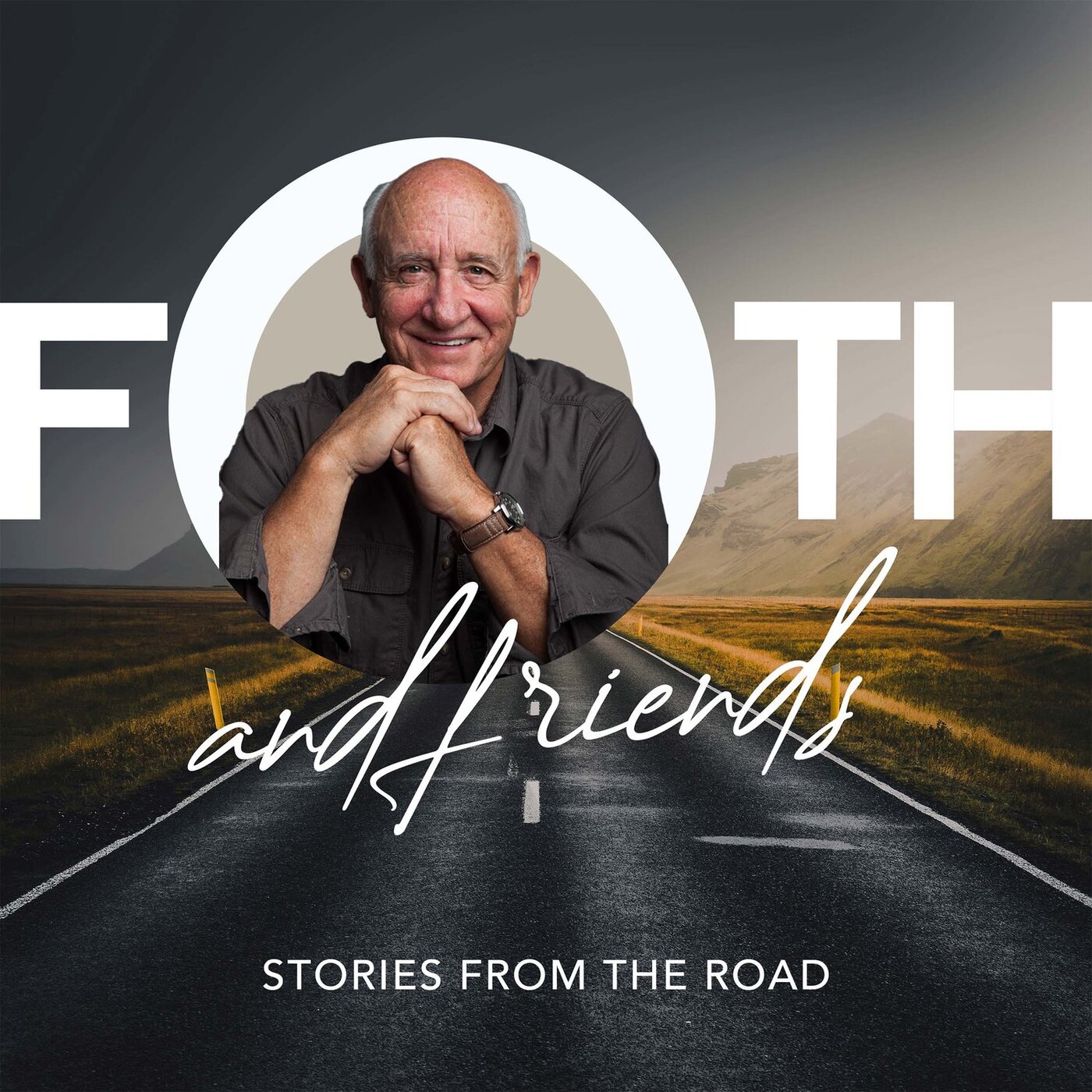
We continue our talk on Love is? Kind with my good friend Hal Donaldson. Looking at his story and how he experienced kindness which sparked what we know today as Convoy of Hope.
References:
Books:
"Your Next 24 Hours" Hal Donaldson:
Amazon: https://a.co/d/dfmMsXt
-
LINKS: "Known" - pickup your copy today:
https://www.known.fm/books
We'll take folks again with folks of friends and stories from the road, and I really am on the road this time. I happen to be out in Southern California. It's not like Botswana or Mongolia or someplace, but it's one of the places God created. He really did a nice job on this part. I'm sitting overlooking the beach and in Southern Cal, and you can hear the waves in the background. And I'm sitting with my friend, Hal Donaldson, and now that name might sound familiar, because I quoted his book last week, called The Next 24 Hours, and it talks about kindness, health. So nice to have you with me. Thanks, Dick. That's good to be with you, too. And there was a moment in time because we were talking about love as kind. There's a moment in time in your life that changed everything, and let me set it up this way. It's the summer of 1969, 1969. And on the 20th of July that year, Neil Armstrong stood on the moon a few weeks later in upstate New York, or Woodstock area. Hundreds of thousands of people stood in fields, and it was the height of what we would call the hippie years, and they were dropping whatever, and taking off whatever, and to smoke them up. It was a huge thing. But for you August 25th, that evening in Northern California, you stood on your front porch, and there was a policeman there. And that moment changed it all for you up to this very moment. Just give us a snapshot, that even sounds wrong to say it that way. But give us that moment, both what happened and what you felt about that moment. Yeah. My parents were hit that night by a drunk driver. A father was killed instantly, and my mother was seriously injured. She'd be in the hospital for quite a long time. Many broken bones and total injuries, and a number of friends and neighbors began to gather in the front yard. And the police officers who had come to deliver the news, stood up on the porch, and they addressed the crowd. There's probably about 30 people who gathered. And the police officer asked, is there anyone here, any family members, any friends who are willing to take the four Donaldson kids home with them tonight? And you were 12 years old, and the eldest of the four? Correct. Yeah. And there was one couple that volunteered, and their names are Bill and Levada Davis. And they said, we'll take them. And I'm sure Bill and Levada thought it was going to be a one or two night sleepover, but we ended up living with them for many, many months for about a year. And all they owned was a, was a small trailer. And so they had kids of their own. And so. So it wasn't even a double wide? It wasn't even a double wide. And, I mean, they were amazing people. And they really helped nurture us from tragedy to wholeness. And in the course of that year, we were with them. And, you know, the Davis is, my mom was seriously injured, like I said, and, you know, she had a crushed ankle, broken hip, broken arms. And so they, after she was released from the hospital, they actually brought her into their trailer, and they went out and bought a recliner. Good. So here's a family that sacrificed their privacy, they drain their savings accounts, so four kids could have a home. How many people in that trailer they, yeah, there were 10 of us that, at one given time, 10 of us. And you had to take turns sleeping on the floor. Yeah. And, you know, there were a lot of beds, and Bill worked at a rock quarry, and so he took extra hours over time, you know, to help feed this small army, Lebeda, spend her days, you know, being a surrogate mom to us, and, you know, washing clothes and cooking meals. And just amazing, amazing people, you know, and I told you this, I didn't become bitter and large part because of people like them. Wow. And as you could be bitter, you could be angry at people with God, the guy who killed them, who walked, never, never was punished, or had any. Yeah. I mean, I didn't have that. And so as a kid, I had lots of questions about God, you know, and certainly justice. You know, my parents didn't have insurance, the man who hit them didn't have insurance, and so our family was forced to survive on welfare and food stamps. And yeah, there were, there were just a lot of times where I just questioned the goodness of God and asking him where he was. Thank you, Vetsha. So, one time you told me that along the way, not at that moment, but along the way you came to the, to the belief, the conclusion, the whatever you wanted to do with your life, you didn't want to have kids have to pick up the food off the back of a truck. That's right. You were on welfare for some time, and what you felt about that, the demeaning character. I mean, it's good. It's a welfare is a wonderful thing, I think, for the moment in time. But so now we're sitting here and we're at a conference that you're the group, the organization, the movement. I call it a movement that you lead in a lot of ways called convoy of hope. Now, as of yesterday, as of today, this day around the world in this 24-hour cycle, 530 plus thousand children got fed and educated, by the way, because that's the, that's the funnel or the platform by which the feeding occurs around the world in 37, 39 nations, 37 countries. 37 countries. That's a long way from standing on a porch on a summer night with a cop, who gave neighbors a chance to be kind, and for the one who would think that kindness is sort of a mushy touchy feeling word. It's a touchy word, all right, in the sense that you talk about hands-on. It's like concrete, isn't it? Yes. It is, and you know, I think it was those acts of kindness that they seemed like little things, but for a hungry kid, it was everything, you know, they'd bring bags of groceries to our door. I'm a kid who was going to school with holes in my shoes and, you know, and there were days that the cupboards were empty and we had to go to school without a sack lunch in our hands. And so there were days that we often felt like a second-class citizen, for sure. It was the kindness of people that made the difference. So I experienced the power, the power of kindness, but I, you know, certainly the shame and the pain of poverty, but also the power of kindness. And it changed everything for me. I saw the goodness of God in them. And if I had not, I would have become bitter, angry, and there certainly wouldn't be a convoy of hope today, at least not with my life. You know, I've heard you share this story. Years of time, so over the years, because we've known each other 40 years. And the story never seems to get old in the sense that it's a canned talk. It always seems to be present. Like if you closed your eyes, you could conjure up that moment one more time. Is that right? I think it's very true. I mean, there are so many details, you know, to it, again, 12 years of age, right? And I think sometimes we underestimate the perceptiveness of children, and certainly I watched everything. I was an observer and people showed me, Jesus, they showed me who he was and what he was about. I mean, I remember men from our local church came and they painted our house. We lived in a very poor neighborhood. And they actually took us out of the house and they came and painted our house. You know, it's those things you don't forget. The woman who took me to get new shoes after church, you just don't forget. And so I think as an adult, you know, the opportunity to feed the masses and to help 400 kids like I was is, I'm just thankful for the opportunity. So we wrapped up last week and I'm going to wrap up now. We wrapped up last week talking about the fact that kindness shows up as one of the fruit of the spirit and Galatians, the 5th Jack Paul's writing to these people and what is Turkey today. And he lists these things, you know, generalist kindness and kindness is right in the middle. And then he closes with this phrase, you know, they're under the thumb of the oppressor, you know, the Roman, hardly anything like the Roman military over the years, I guess. And he said against such, against these things, there's no law. And the thought I had was, what if kindness was a punishable offense like how would I get any time in jail, would I get off with probation? I mean, what I like that thought, what do you think about that thought? I don't know that it's my thought. I'm sure other people have had the thought, but I didn't have it last week. I think a lot of times that we think of corporate kindness, we think of church kindness, organizational kindness. Hopefully, you know, this is a kind of way of hope, for example, is reflective of personal kindness. I have to live the life that people involved with kind of live a life 24, 7, you know, that's going to be a way of life. And to move beyond an occasional action compassion to a life of selflessness, which I believe is the next level of compassion, it has to be who you are. And when you demonstrate kindness because it's who you are, it makes all the difference in the world, to the recipient, you know, when you look them in the eye, you smile, you give them a hug, and then you give them a plate of food and you tell them that Jesus loves them. Wow. You're talking about power. It makes all the difference. It does. It really does. Health Allison, thanks for being with me. I always love being with you. Hey, it's mutual. You know, I think back 40 years ago when I was a student at Bethany University and the investment you made in my life. Great. Thank you. Thank you. With that, we're going to sign off and I would encourage you not to do random acts of kindness. I'd encourage you to go get after it, intentional. That'd be all right. I love it. I'll probably get emails on that, you know, we'll see you guys later. This is Dick Fos and Hal Donaldson. We're out. God bless you. We'll be back next week with stories from the road.