

 Apple Podcasts
 Spotify
 Youtube Music
 LOVE is? KIND

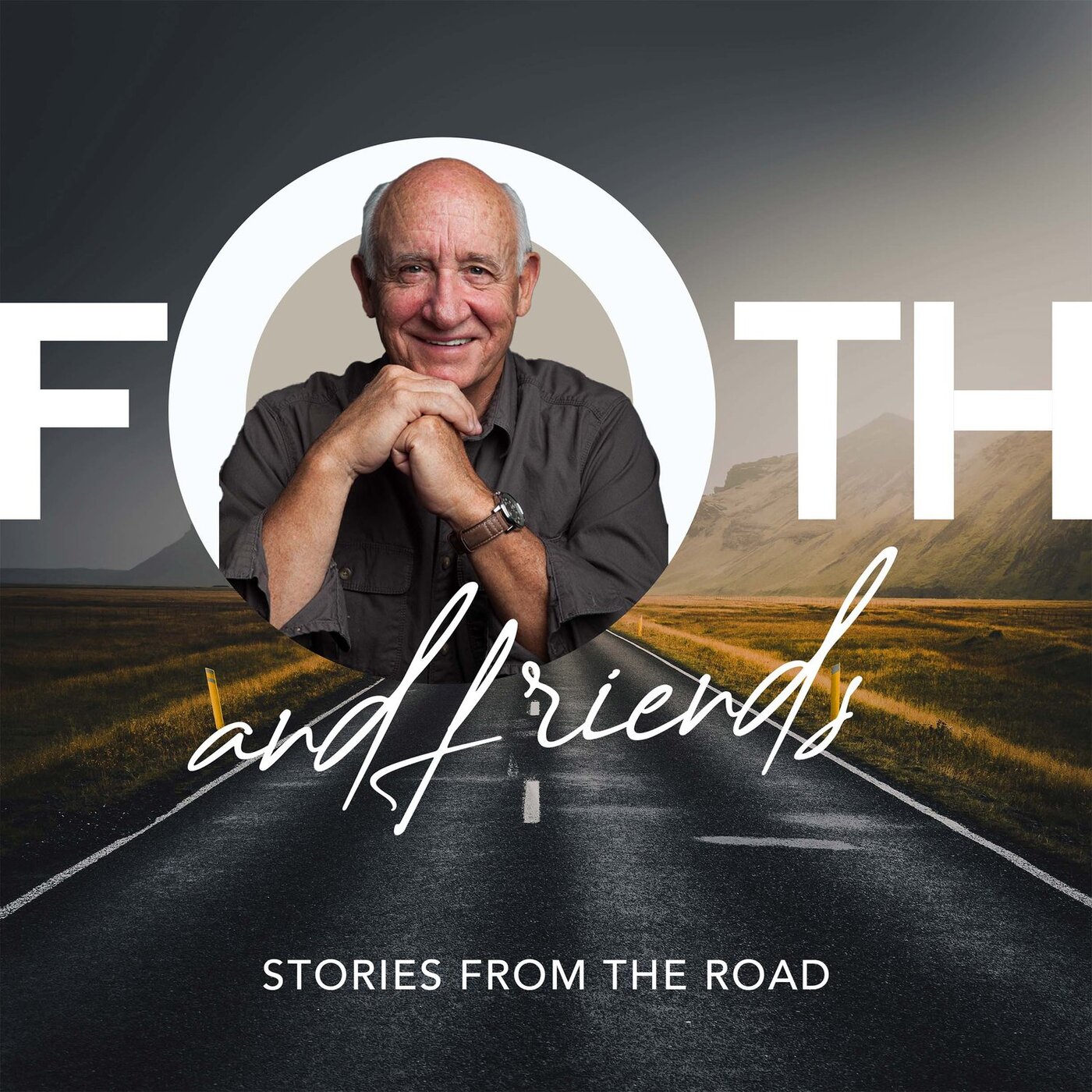
Exploring Love
Reach back scores of GENERATIONS. Dawn of creation. WE HUMANS need KINDNESS!
Meet three of my friends: Micah. Hal. And Barry.
HAL: President of Convoy of Hope
BARRY: President of BIOLA University
References:
Books:
"Your Next 24 Hours" Hal Donaldson:
Amazon: https://a.co/d/dfmMsXt
"Love Kindness" Barry H. Corey
Amazon: https://a.co/d/iA5IzT6
Bible references:
- Proverbs 19:17
- Micah 6:8
- Galatians 5:22-23
Well, it was about 25 years ago, I think. I asked two 89-year-olds, a man and a woman in successive years, who are very different from each other. I asked them this question. Coming back, what's the most important personal quality in a life? And both of them said the same thing, kindness. Dick Foth here, one more time, with stories from the road. And we're exploring in these weeks the idea of love, our last podcast we talked about love is patient. This time, love is kind. Over the years, I've talked to lots of couples, men and women, and here's this lovely lady oftentimes. And he, not so much, I mean, he wasn't as muscular as he once was, or he didn't have as much hair as he once had, or I used to say, look like he got run over by a wounded water buffalo. But I'm kinder now, so I don't say that. So I asked her the question, why were you attracted to him? And usually, the ladies did not say, well, he was like an adonis, or he was rich, or adventurous, even humorous, even though that's big. What they did say was I was attracted to him because he was kind and considerate. What's that about? Wait, you can reach back scores of generations, hundreds of years, back to the dawn of creation, and I would submit this, that we humans need kindness. In the Hebrew literature, from ancient Hebrew literature, what we call the Old Testament, there's an almost untranslatable word, sounds a bit like you're clearing your throat when you say it. It's chesed. Chesed is loyalty, it's compassion, it's mercy, covenant, but at the heart of it is kindness. So when you look back at those proverbs, like proverbs in 1917, when it says whoever is kind to the poor, lends to the Lord, and he will reward them for what they've done. That's a very interesting thing, whoever is kind to the poor, lends to the Lord, and he will reward them for what they have done. That's a chesed quality. For the business folks who are listening and women, you'd call it ROI, return on investment. It sounds a lot like what you read in the Gospels where Jesus says, if you give and forgive, it comes back to you, pressed down, shaken together, running over, poured into your land. Well, here I am on the road, not exactly on the road, but in the road of life. And I want you to meet three of my friends today. One is named Micah, another one is Hal, and another is Barry. Now I've never met Micah in person, but I've been with Hal in Barry many times over the last 40 years. And here's the deal. We can meet people face to face. That's how we usually think of it, or we can meet them through their writings. That's how we're going to meet Micah and Hal and Barry today. Micah would have written at least 2,500 years ago, and he's writing to a nation of Israel who have a collective faulty memory, apparently. They've forgotten the kindness and grace of God to them over the centuries. He reminds them, Micah reminds them, of what is important, and he frames it in this context. All the burnt offerings, all the sacrifices, all the, that's not really what God wants. This is how he says it, Micah 6.8, one of those Old Testament prophets. He has shown you, O mortal, what is good? And what does the Lord require of you to act justly and to love Chesed and to walk humbly with your God? Some translations have that to love mercy, some to love kindness. It's all in the same tapestry, if you will. What does the Lord require of you to act justly, to love Chesed and to walk humbly with your God? Be just, be kind, be humble. So that's Micah. My friends, Halen Berry, well I met them both in the mid-1980s. They know each other. Their stories are connected because of events with their fathers, with their dads. Both their dads were clergymen, but they had opposite experiences with their fathers in this sense. Hal's dad was killed by a drunk driver when Hal was 12. Berry's dad lived a full and rich life. He and Berry were very close. As it turns out, as I speak this, Hal Donaldson is president of a wonderful charity that reaches around the world, one of the top 50 in the United States, I understand, in terms of reach. It's called Convoy of Hope. Berry is president of university in Lamarada, California, called Biola University, a school of about 6,000 that also has reach around the world. But both interestingly enough, have written books on kindness. I want to just read to you from those books. If you hear pages turning, it's because I'm walking through somebody's life. This is how books are. And Hal's book is called Your Next 24 Hours. One day of kindness can change everything. The story is that he ended up in August of 1969, standing on his porch outside their home in Northern California. He is a 12-year-old and the oldest of four, having heard the news from a police officer, that their parents have been in a horrific wreck that killed his father and maimed his mother, debilitated her for some years. And the police officer says to the gathered neighbors, is there anyone here who can take these children, otherwise they have to go to family services, and a family volunteered. The Davis's, the children of their own, and they lived, I think, in a double-wide trailer. And for the next year, they thought it might be a, you know, I think the normal thought would be, well, this would be a few nights or a few weeks, turned out to be a year or more that all of those folks lived in that trailer. And it was the kindness of the Davis's that profoundly impacted Hal. So I'm reading from page 14 of his book. And this is what he says, occasionally bitterness threatened to rear its ugly head in Hal's own life. But the Davis's were always nearby to offer a helping hand and parental advice. Don't allow the tragedy of your childhood to become a lifelong excuse, Bill said, because where you start in life doesn't have to dictate where you end. Hal goes on to say the Davis's were right, fulfillment doesn't come from exceeding others. It comes from elevating others. So not only does kindness give something to other folks, but it works back against bitterness in one's own life. One day in 1994, Hal said, I made a decision that would change the course of my life. It began with a couple of simple questions. What if a person was led by kindness took his eyes off himself and focused on the needs of others? What difference could he really make? There's this other proverb, proverb 21, 21 that says, whoever goes hunting for what is right and kind finds life itself. So along the journey, he says, you will discover that each day is filled with new opportunities to make the world a little kinder, opening a door, flashing a smile, saying, thank you, letting others go first, apologizing for a mistake, paying for a meal, complementing the waiter or greeting a stranger, giving a kid a high five and much more. The last thought that I will pick from his book, think of your heart as a bank vault that's packed with the currency of love and kindness. When that currency is hoarded, twisted, but when it is invested in the lives of others, it pays great dividends. Let me return on investment. Let me read to you from Barry's book. Barry's book is called Love Kindness, Barry Corey. Love kindness. Discover the power of a forgotten Christian value. Barry's situation is quite a bit different than House. He didn't have that tragedy. His father lived into his, at least his late 60s, and there was a wonderful relationship between the two, and House speaks to it in terms of, at least the part I read, House speaks to what happens when you understand yourself in terms of kindness and your motivation. Barry speaks to that as well, but his, the piece I want to read, is what does kind look like in a divided society? What does kind look like in a divided society? This is what he says. Kindness embodies courage, although courage does not always embody kindness. Kindness embodies courage, although courage does not always embody kindness. Too often our centers are firm on conviction, but our edges are also hard on our tactics. This way is characterized by aggression. On the other hand, there's the way of niceness. Aggression has a firm center in hard edges, niceness has soft edges, and a spongy center. Niceness may be pleasant, but it lacks conviction, it has no soul. Kindness is certainly not aggression, but it's also not niceness. Kindness is cosmetic, it's bland. Niceness is keeping an employee in the job, knowing he's no longer the right fit, but failing him and the company because you don't have the courage to do the kind thing. Kindness calls you to tell him he's not the person for the position and then dignify him in the transition. I love this line. Kindness is fierce, never to be mistaken for niceness. They're not the same, never were. Kindness is neither timid nor frail as niceness can be so easily. Kindness is all over the Bible, plentiful in both testaments, but you won't find niceness there once or nice for that matter, since the early church disciples have walked the risky and sometimes dangerous road of kindness. In today's polarized culture, we are often pulled toward one extreme or the other, soft centers or hard edges. I am proposing a different approach, a third way, rather than the harshness of firm centers and hard edges, rather than the weakness of spongy centers and soft edges, why don't we start with kindness? Kindness is the way of firm centers and soft edges, just in wrapping this up. What does kindness look like when we extend it to our enemies or the outcast, the bullied or the lonely, the unsavory or the unlovely? What does it look like to be kind to the persecutors of Christians and not just the persecuted? I wrote this book, Barry says, as an alternative to the voices of barbed wire wrapped people who were picking fights from pulpits, blogs, talk shows, town meetings, or political reforms. I also wrote this book to demonstrate that kindness is not anemic or convictions, rather it has the power to influence others revealing the truth and grace of the faith far more than the insecurity of confrontational posturing. I wrote this book for me, he says, the ordinary guy, he grew up, the ordinary guy who grew up wanting to live a life of meaning without meanness. Talk about divided society, well first of all let me say this. Go get these books, I get no kick back, I get no dollars, I get no favors. They are by Hal Donaldson, your next 24 hours. One day of kindness can change everything and love kindness by Barry Corey. You can get those online. I don't have a stake in your purchasing these books but I do have a stake like you do in kindness at work. Talk about divided society, politics, class, ethnicity, money, you know the standard stuff. There's a verse that the Apostle Paul wrote back to folks who were in what is now Turkey. Galatians 5, 22, 23 says it this way, but the fruit of the spirit is love, joy, peace, forbearance, here comes kindness, goodness, faithfulness, gentleness and self control. And here comes the kicker, I love this line, against such things, there is no law. What if being kind was punishable under the law? I mean you can hear her say it can't you, yes my George just got a $3,000 fine in two months in the county jail for excessive kindness toward Mr. Patel at the corner store. Or several of our neighbors got fined $1,000 a pop for throwing the surprise party for the teachers at Horusman Middle School. I've never heard someone say Sally was so kind, really intrusive, or I was so offended by that kindness, how are they brought up? What I have heard was an emphasis with these verbs. When they did that I was totally surprised, stunned, caught off guard, overwhelmed, sometimes even brought to tears. Okay, I'm done, let's wrap this up. Let's think again, what if being kind was against the law? I ask myself this question, both if kind were against the law, would there be enough evidence to indict you or find you or send you to jail? You say that's weird, that's sick, I don't think so, I think that is an excellent question for me to ask myself, both if kind were against the law, would there be enough evidence to indict you? That's it, I'm out, God bless, have a wonderful week, we'll catch you later.