

 Apple Podcasts
 Spotify
 Youtube Music
 Love That Never Lets Go

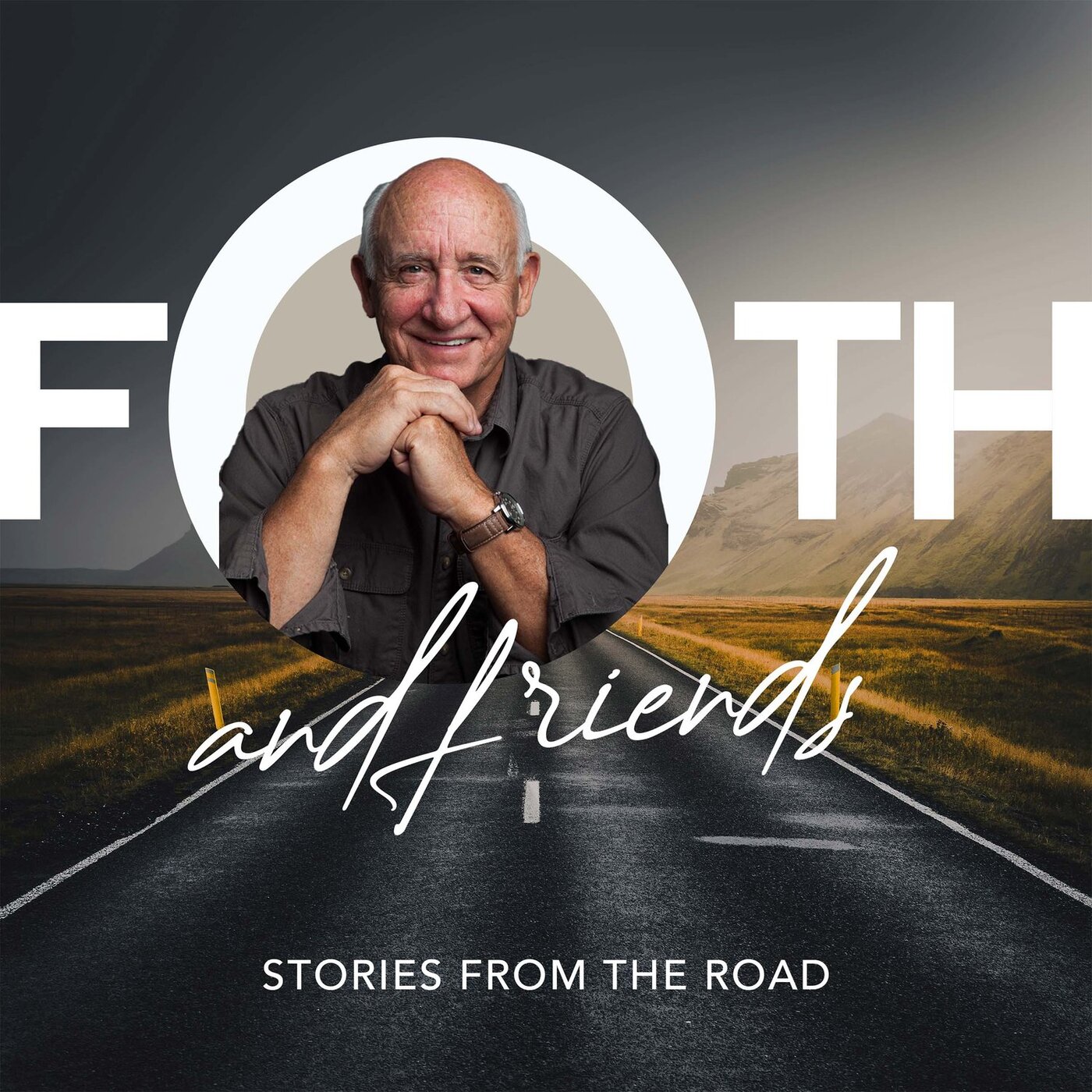
Well, hello again, Dick Voth, the stories from the road. July 4th has just passed, just in the past few days, and that's a huge day in the United States of America. But for me, there's another day, a week later, and that's where we are, as I record this, this is the week of July the 11th. And July 11th has meaning for me, for the year 1910, that would be 113 years ago. It was on that day in the Central Valley of California, that great San Joaquin Valley, that a baby girl was born, her name was Gwendolyn Bantz Boyd. She was the oldest of six. She would turn out to be a wonderful wife and mother and grandmother. She would be an accomplished musician, have a great laugh, keen sense of humor, and a stably looking her eye, now and again, when she needed to. But she was my mom, and had she been alive this day, if she were alive on this day. She'd be 113 years old. She's been gone for 13 years. She made it to four weeks past 100 and died in 2010. But the year she was born, William Howard Taft was president. There were a thousand miles of road in the United Paved Road, in the United States in 2010. That year Henry Ford built 10,000 Model T cars. You could buy one for $750, but that was a bit more than the annual per capita wage of the normal person, the typical person in the United States. I think per capita income that year would have been somewhere between $570 and $750. You could have, however, I think you could have bought three loaves of bread for 10 cents back in that day. You could get a pair of shoes for nothing by our standards today. You could get knee pants for school according to my data for 49 cents, and a man's raincoat rubberized would be $10. If you were an automobile salesman, you'd get $10 a week as a trainee and $25 a week if you were experienced. If you're a shoeshine boy, you get a Nicola customer and on it goes. It was a different day and a different time. Every once in a while somebody will say to me, have you ever experienced the kinds of things that have been experienced in the last few years around the world? The COVID and all of the economic pressures and that sort of things, war is going on. Well, I did. I suppose back in the 1960s and 70s there was some of that, but my parents were the ones who would have experienced that, wouldn't they? Mom was born in 1910, 1914 the Great War to end all wars started in Europe. In 1917 you had the Spanish influenza pandemic, 1929 the stock market crashed. The next 10 years were what was called around the world, the Great Depression, and then you have World War II and on and on it goes. That generation has often been referred to as the greatest generation and we say that I suppose because of the things they endured survived and it shaped how they saw the world. It shaped how they saw money, shaped how they saw themselves. My thesis is you could go to the home of someone who came through the Great Depression and go to their freezer in their refrigerator or the extra one in the garage. And you would find it full because they had determined that that breadline thing was never for them again. But I watched my mom's life and in the arc of her life she had both some great joys and some great challenges. And my parents married in the early 1930s and then my sister was born and then I was born in 1942. We went off to India, my parents were missionary educators and I know you've heard me say this before, but I just make this point that a variety of things in our lives take us different places, don't they? Different sets of circumstances, different sometimes privations, sometimes great joys. So my early years from three to seven were spent in India and my mother had some significant physical challenges and others while she was there. We came back and lived in Oakland for a number of years, Oakland, California. And then along the way I went to college and married Ruth and that year I married Ruth in 1963. We went off to grad school in Wheaton, Illinois and my mom was there at home with dad and they had been having some tensions over the years. And many of you listening understand what tensions are in marital relationships. In October of that year I got a note from my father saying that he was leaving. And so after 29 years of marriage my mother was left on her own at the age of 54 or around that age, never having worked outside the home. I look back and I don't glorify this or I don't think I'm seeing this through rose colored glasses, but I look back and I see the tenacity she had that what she would call I suppose or others of her age would call stick to itiveness. And she moved to Southern California where my sister lived and there she taught herself to type back in the day. And she got herself a job as an admitting clerk at Huntington Hospital in Pasadena California and worked there until she was 72 years old I think or 70. And then they said Gwen you know you're you're getting up to that age and they needed to retire her and she went across the street to quite a posh or fancy retirement center and worked for another 10 years. She drove in Southern California for years well until she was 92. Actually you may have seen her she might have passed you at speed she was not she was not a little old lady from Alcadena with tennis shoes honestly to say she she thought I think she thought she was still in India you just put pedal the metal and go. If you if you drove with my mother your prayer life was certainly increased. When I think of my mom I think of those verses that Paul the Apostle Paul wrote and it was just a few days ago that I stood with a son-in-law and grandson in Rome Italy. It would have called a mammothine prison the place where the Apostle Paul and Peter at some point were held 2000 years ago before both of them were executed. And we've been in some of Paul's writing where he was writing to the Corinthian church and he talks about love here in this passage in Romans and that's where we were in 90 some degree heat and 80% humidity just a few days ago. He speaks about love again here in Romans and he's writing to people friends of his in Rome and he's talking about the love of God for us and my mother knew what it meant to be loved and when you know what it is to be loved it helps you love better doesn't it more than just giving you a model it does something in your spirit. And this is what Paul says about being loved by the most high Romans the eighth chapter if God is for us who can be against us and I am really fond of putting my own name in there and I encourage you if you read this text put your own name in there. If God is for Richard folks who can be against dick he who did not spare his own son but gave him up for dick how will you not also along with him graciously give dick all things and it goes on like that through these verses and you get down to verse 35 of chapter eight. And it says who shall separate us or dick in this case or Gwen or Susan or Jose or Maria who shall separate us from the love of Christ here we go shall trouble or hardship or persecution or famine or nakedness or danger or sword. I just like to encourage you to think about that text and both put your name in the text but also what is it that makes you feel in danger what is it that makes you feel uncovered vulnerable naked whatever it is my mom I think would probably put physical hardship or divorce in there. It goes on in verse 37 to say no and all these things we are more than conquerors through whom who loved us there's that love word for I'm convinced that neither death nor life neither angels nor demons neither the present nor the future nor any powers neither height nor depth nor anything else in all creation will be able to separate us from the love of God that is in Christ Jesus our Lord. And I think of my mother I think of resilience I think of music I think of how she loved her family and was loved back I think of her her her sense of humor in difficult situations when Ruth and I went to Washington DC in 1993 I was 51 years old and for two or three years after that I had been a president of a small college for a time for several years after that my mom would call and say Dick honey could you tell me one more time what it is exactly you do because in our role there we would walk with people befriend people and leadership and just try to encourage them without an agenda for them. And my mom said you used to be my son the college president and now it sounds like you just have lunch with guys I said well that's that's about it mom that's how that works. And as she aged she never lost her song in spite of the challenges she would always have a song and she was a consummate pianist really. And she never lost her love for us her family and she never lost her sense of humor even at age 95 when she started having a touch of dementia she was still funny I mean you know dementia is not funny at all but my mom was funny I called her on her 96 birthday and I said mom this is Dick she turned to somebody in the room and said my brothers on the phone well she has four brothers none of whom is named Dick I said mom this is your son Dick. And she lived in Southern California in Orange County at that time and she said oh oh yes Dick you live way over there don't you can I was in Washington DC. And I said yes mom I'm in Washington DC and she said you know I have a son in Washington DC and I said mom that's me and she just cackled if you will just laughed it said there must be two of you. It's it's like God gives a measure of grace in some situations to help us chuckle when there's great pain or increasing distances you have with loss of memory and all of that. But in this July 11th week I just want to honor the memory of Gwenforth because she instilled both the opportunity to meet Jesus and the opportunity to be loved by him. But also modeled a kind of strength in great tension and great challenge. She she would take me to task more than once and oftentimes she'd ask me questions that were not questions at all they were statements but she certainly got my attention. I felt cared for by her and in this week 113 years after her birth I just say mom you're the best and thank you for showing us that nothing can separate us from the love of God. So the year is 2000 it's mom's 90th birthday and we decided to do something special for her. My brother-in-law Bill Crandall and Luanne my sister arranged for a friend of theirs in Southern California to go and pick up mom in his vintage rolls Royce. He did that it was very classy brought her to a very fancy hotel where a hundred folks were waiting to surprise her. She came in and was of course loving every minute of it and her brothers were there her sister and others and folks had great food and chatted together and we had a program. And toward the end of the program someone said Gwen wanted to go play us a song and she went over and sat down at the piano and she used to go to retirement centers and other places and play organ and piano for an hour or so to crack for as she put it those older folks. And so she started out usually she started with showtunes and other things and morphed into gospel songs and so she sat and played one of her favorites Hawaiian love song and then started playing what I consider her signature song. We put that in the context of Romans 8 where it talks about what are those things that would separate you from the love of Christ whether it was discouragement or battle or rejection whatever it was. If you put this in that context and you hear her sing it you'll you'll just get a sense for who she was her signature song was no one ever cared for me like Jesus. She's 90 years old friends I believe she really hits those high notes beautifully still and with this we're signing off God bless catch you next time. He is something that no other one could do. No one ever cared for me like Jesus. There's no other friends no one ever cared for me like Jesus. No one ever cared for me like Jesus.