

 Apple Podcasts
 Spotify
 Youtube Music
 Reflections on Liberty

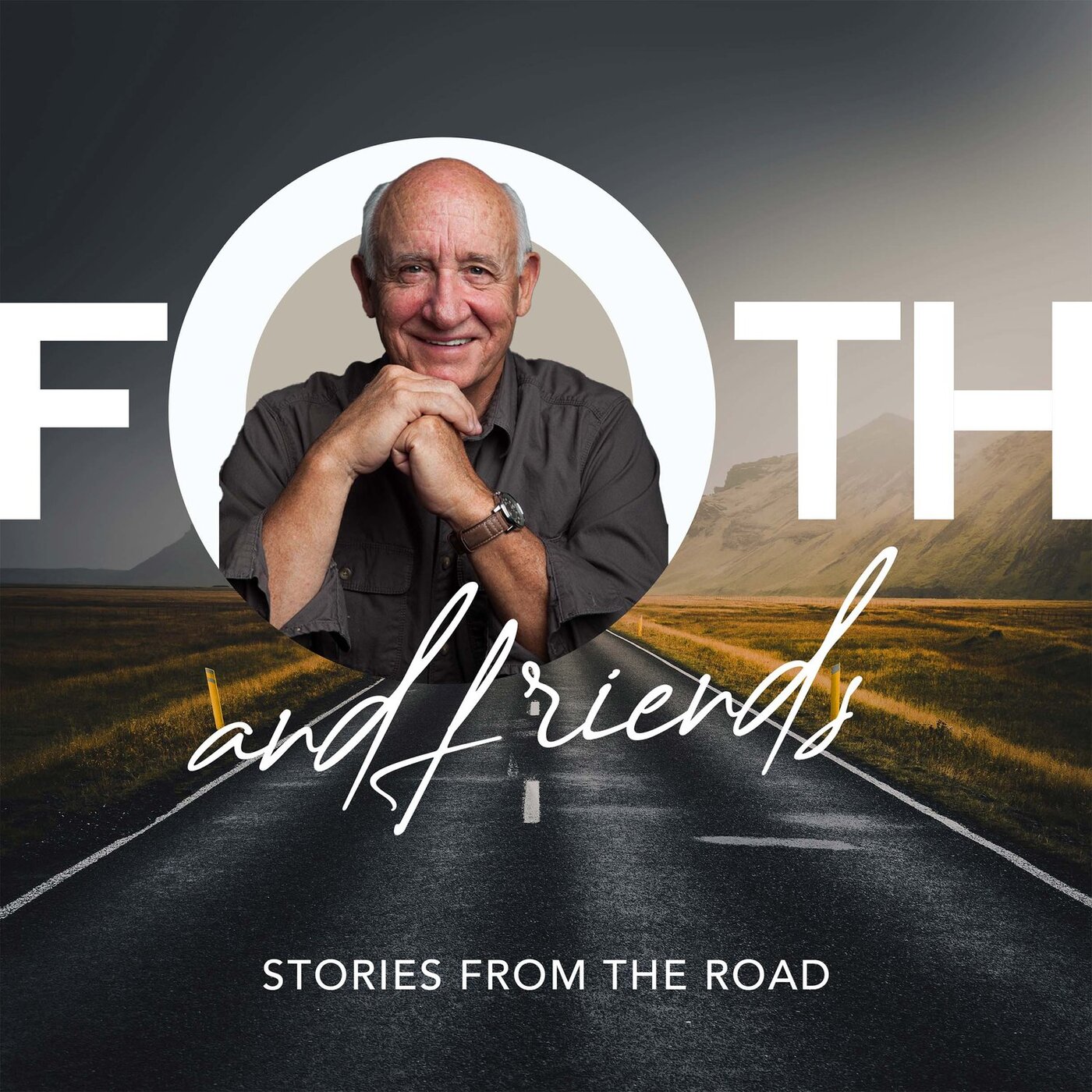
Hello, this is Dick Foth and I'd like to welcome you to a known story to make sense of it all. And these stories are found in walking books that is real life people in different places, of different ages, in different cultures. We want to have these kind of conversations across disciplines and generations and cultures in order to encourage a kind of knowing that gives us fresh lenses through which to see the world. One of these lenses will be that of Scripture and in particular, Jesus of Nazareth, whose life changed the course of human history. We're so glad you're here. Thanks for listening in. Well, hello again. Last time we were together, I was having a conversation with my friend John Ashcroft, former Attorney General of the United States. And as we continued that conversation, we got into the subject of liberty as a value of a culture and a society. One of the interesting things about the Department of Justice is the flip side of that, if you will, might be called the Department of Liberty. And as John talked about the relationship between liberty and a democratic system, I found it fascinating. Here I'll let you listen. So John, here we are. We're actually sitting in a parking lot in the garden of the gods. You have just spoken at the baccalaureate service for the Air Force Academy in that spectacular chapel. And you talked about liberty. Talk to me. Talk to us about your thoughts on liberty, as relates to both the culture, the governance of our own nation, but also at the core, what that means for us as individuals. Well, I think liberty is something that God built into creation, that we were designed to make free choices. And I think God had plenty of command creatures, control creatures in the angelic hosts. But it creates people to make choices. They have to choose for or against God. They have to make choices and those choices are consequential. So while liberty, I think, is the core value of the American culture. I think it's a core component of human existence and that people flourish in situations where they have freedom. And they don't in situations where they are controlled or they are deprived of freedom, to be what God intended them to be, to be innovators and creators, things like that. So my sense is that liberty, yes, it's an American value that's expressed profoundly here, but I think it's more than that. I think it's part of creation. So when Elexida Tocqueville, this sociologist comes from France in the 1830s to study prison reform and he starts interviewing Americans about what they consider their highest value, his distillation of that essentially is that freedom is the as you put it, the core value. But even more than that, individual freedom is the core value. So you're saying that freedom both as a God-given component of who we are is at the heart of who we are, but it's also at the heart of the nation. Yeah, well, if you'll look at our history, it was Patrick Henry who famously said, give me liberty or give me death. And the folks who dumped, dumped the tea into the harb called themselves the sons of liberty. And the declaration of independence talks about we hold these truths to be self-evident that all men are created equal and endowed by their creator with life, liberty and the pursuit of happiness. If you think about those three things, life, liberty and the pursuit of happiness, well, obviously you don't have life, yes, we're alive, but meaningful life requires liberty and liberty is a means to pursue happiness. It's another description of it. The core of those, that triumphant of values expressed in the declaration is liberty. And I think that's what has made America special. I think the reason the French Santa Santa statue named the statue of liberty. They didn't name it the statue of even democracy. They'd seen what a runaway democracy intoxicated on just majoritarianism that resulted in the deprivation of life and liberty for a whole lot of people at the guillotine. So, so, so majoritarianism, school me on that, you mean that the majority by a vote of any kind of referendum can determine what, what is or what is it? Yeah, I think people who founded this country were very much afraid that the majority would deprive individuals or minorities of their capacity to exist and make free decisions. And if you look at our constitution, it's really a series of safeguards against a runaway or intoxicated majority. We have divided the law-making system into the house and the senate, and they can't even act without the president of the United States. So, this fragmentation of governments a design to protect against an overreaching majority, a democracy that begins to act like some of the overseas democracies do. They discriminate against minorities. I think now we are in trouble in our country because when a new regime appears overseas, we ask them, were you democratically elected? And if they say yes, we say, okay, yeah, we'll recognize you and we'll fund you. That's the first two things we do. The first two things they do is kill all the Jews and run the Christians out because they don't believe in liberty as a controlling value. Democracy, it should be understood, is a process. Liberty is an outcome. And democracy happens to be one of the better processes for ultimately safeguarding liberty, but you have to safeguard even against a democracy which intoxicated and run away toward majoritarianism, deprives the individuals or minorities of their rights. And so our constitution fragments government to keep stuff from going too far. And then most of the states didn't want to ratify the constitution unless there was a bill of rights. And the bill of rights says, now look, these are freedoms here. And these are liberties. And we want these safeguarded specially. And you can't do away with them. And the last of those is that the federal government has no right to do anything that is not specifically authorized to do in the constitution. It's the amendment. All of these things without debating any one of them in particular are designed to safeguard against an overreaching democracy. And what are they safeguarding? You know, the safe is not the most important thing in the bank. What's in the safe is what's the most important thing in the bank. And what are the constitution designed to safeguard? It's this opportunity of men to reach the maximum of their God-given potential in a context of their own choice making and the consequences of their choice. And you have to say that that's liberty. So no wonder people said, give me liberty or give me death. Or wonder people said, we're sons of liberty who take this no taxation without representation. So how would you would you have a one sentence or a one phrase definition for what liberty is? Well, liberty is the freedom to act with consequence. And by and large, we should inhibit it only when it is going to be an injury to someone else when you say act with consequence. What do you mean? Well, there's so much today in our culture that says, doesn't matter what you do it, you won't have any consequence. You know, what happens in Las Vegas stays in Las Vegas. Yeah. And you know, as if if there's a right to do things that you don't have to accept the consequences, that's not freedom. But you have a thought about that. Yeah. Well, the absence of consequence is not freedom. The absence of consequence is meaninglessness. For instance, if you want to act and say you want to hit a nail and you want to drive it in, but if you can't be assured that when you hit the nail that it'll go in instead of fall out or bend over or disappear, you don't you can't count on a consequence. You can't even construct a simple box or if you're holding something and you want to drop it. If there's no predictable consequence, if there are not laws of nature that govern consequence, you let go of it and it stays there in mid-air or it goes up or goes sideways. What what freedom is there? What value is your liberty to make a decision about whether you seize it? You'll cling to it or you let it go. You know, while back few years back a young man asked me, what is your do you have a fear as you age? And now here we are to 75 year old geezers at the word we want to use. Oh yeah, that's the geezer. We've entered geezerdum and we're probably well into the geezerdum. See, I say we're just into the fourth quarter and if you look at March madness, a lot of good stuff happens in the fourth quarter. But I say that when you get to be our age, you're probably in the two-minute drill. We're in the two-minute offense. That's the difference between the basketball fan and the football fan. The two-minute offense is you better get it done quick because time is running out. Clock is ticking. So this young man said, what is your greatest fear? If you have a fears you age and sort of I just blurt it out the fear of being inconsequential. And I think it it fits with and that doesn't mean that I need to run something. It doesn't I don't mean to be president of this or head of that. But it does mean that that even in these in these more advanced years, I never thought it'd be this old, that either what we say or how we invest our time or energy has consequence and it's a good consequence. And what I hear you saying is that that actions without consequence or without negative consequence, whatever it is, doesn't make a person free. It makes them meaningless. It's a little bit like what I'm saying is that there is no such thing as action without consequence. Yeah, okay. And you cannot the way you can avoid consequence is to avoid acting. If you don't act you won't have a consequence. If you don't speak you won't have a consequence. And I think what God says to us is in creating us. He says be very careful what you do because you have great consequence. And frankly, that gives dignity to humanity that you couldn't find in any other way. If it was if it were possible for us to act without consequence, we would be meaningless. What if we were to all the things we were to do, all the efforts we were to make were not so God gives us consequence. And theologically, the invitation of people to participate in the redemptive mission of Jesus by forgiveness and by working for restoration for healing relationships. And literally for healing period like doctors, think of all the great and noble things that happen because God has given us the idea of consequence. We short change ourselves if we think we can do great things with consequence, but if we do demeaning or immoral things, they won't have consequence. That's a fabrication and a myth that leads us to a self-destructive idea that if you don't have consequence, you're meaningless, you're worthless. I know people who are old, who are feeble, who have consequence because they either write letters or some of them are prayer warriors. And they have consequence. I believe that the creator of the universe responds to the acts of individuals, including prayer, and prayer itself can be very consequential, not only for the person praying, but for the object of the prayer itself. Let me circle back to something just from in it. You used a word that in our 67 years of friendship, I've heard you use a bunch of times in a bunch of different settings, and I want you to elaborate on it. We'll just take a couple more minutes here. The word you used was noble. This little five-letter word that I've heard a number of different conversations, speeches, some writing, talked us about one way you got that word, and two, why it has meaning for you. Because it must. I used to hear my father pray in the mornings to begin the day. And he would ask that God would help us to do things that were noble. And nobility is hard to define, but I think it is doing things that transcend your own self-interest, doing things that are in the interest of the community, that godly things that would elevate people and enrich people rather than to devalue them. When people decide to put others in front of themselves, to borrow from Scripture to think of others as better than themselves, this is Christ-like. What could be more noble than to offer yourself as a sacrifice for other people, so other people wouldn't have to suffer? And speaking at the Air Force Academy back all day at this morning, I commended them for and other members of the military for being willing to place themselves between disaster and their fellow men, between aggressors and innocent citizens between evil and their neighbors. Jesus set himself between an eternity of meaninglessness and devaluation and to protect people so that they could be reunited with the father. How could something be more noble than that, that human existence somehow reaches its intended purpose because someone decided, Jesus decided that it was more important to do that than to save his own existence? It strikes me even as you're talking that sometimes in our country, in the West, we have some fascination, some more than others, with the royal family in Great Britain, for example, the royals, as they're called there. In very few of us, in scriptures there's not many princes, not many. Very few of us could aspire or be born into royalty, but as I'm listening to you talk, there's no reason why any of us should not walk in nobility in this, not lofty, but to coin or to pick up on an Air Force phrase that we heard today, to aim high, if you will, in terms of what we do with our lives. Yeah, people, young people ask me, what do they recommend? I always say aim high. You may not hit what you're aiming at, but you'll hit something up high. If you aim low, you'll probably won't hear what you're aiming at either, but you'll hit something down low. And the idea that there is a capacity, and I think there's something placed within us, maybe it's the mark of the creator that's in us that responds to the idea of nobility. This Christ-like willingness to sacrifice oneself so that others can either be improved, enhanced, enriched, or survive. And this was obviously the object of Jesus in the world. It was not easy. He wrestled with his own crucifixion and pled in the garden. Wow, do I have to go through with this? Not finally, not my will, but thine. Be done. And then on the cross says, my God, my God, why have you forsaken me? But then he says into thy hands. He says, the into thy hands sort of idea is that God receives him and he trusts God. In the hands of God, doing noble things brings eternal consequence. And that's a pretty interesting idea. Well, on that interesting idea, we're going to end this conversation. Get out of the car and go walk through the garden of the gods. We'll talk more later. Thanks.