

 Apple Podcasts
 Spotify
 Youtube Music
 The “FAMILY” Story -Part 1

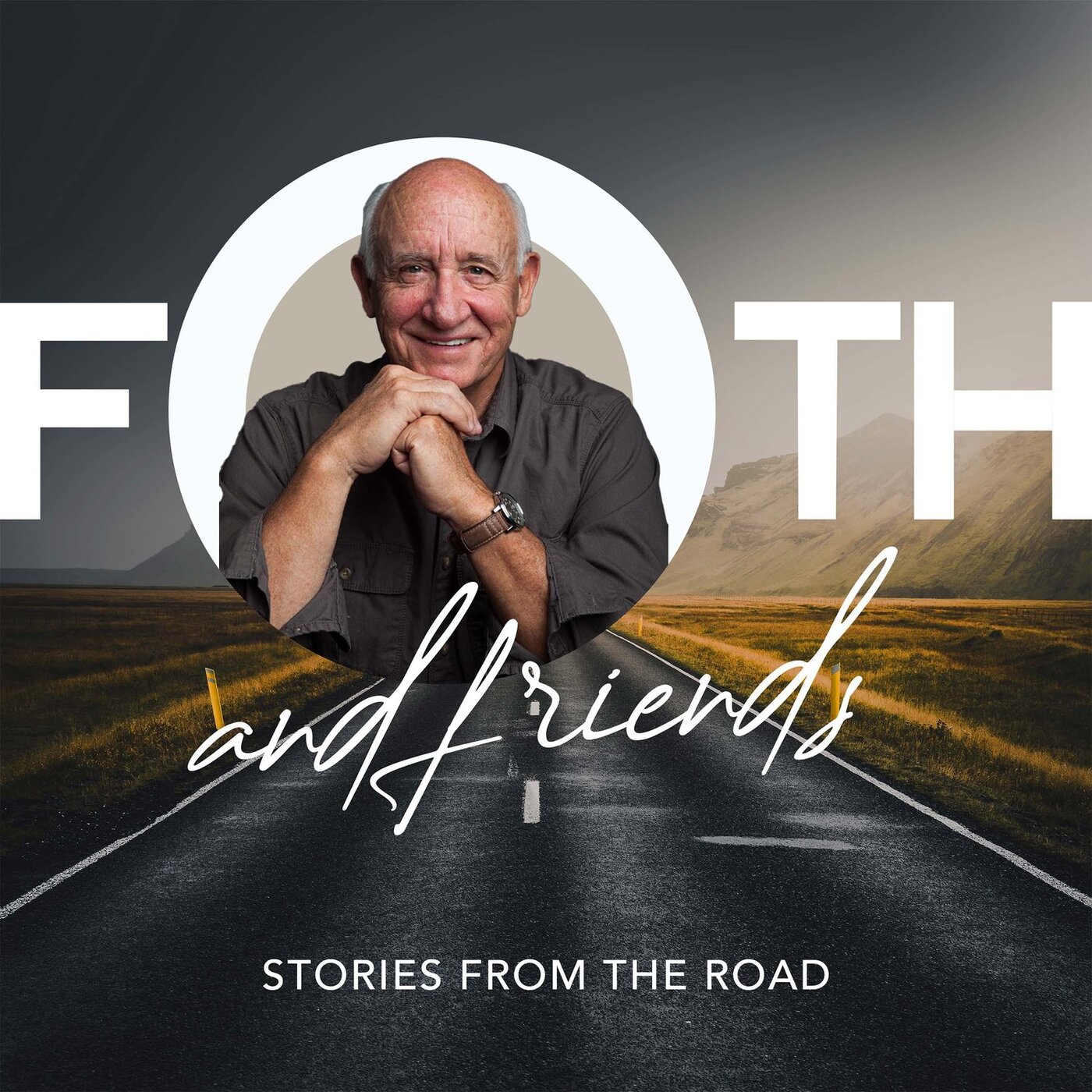
Stories from the Road!
On the Road! As Ruth and I travel from Colorado to Washington DC we travel through some cities like; Colby, KS, Augusta, KY and Marietta, OH.
In Washington DC, Dick Foth speaks at National Community Church and we recorded a session of Stories I Love To Tell. That evening we were hosted by my good friend Mark Batterson and told stories.
One particular story was about Anna Tomasek.
As we continue we introduce Kristin Orphan from Finally Home. (FinallyHome.net)
Hello again, friends. Here we are again, finally. A friend who is a subscriber to this podcast text me just a few days ago saying, hey, where'd you go? How come no more podcasts with us? Well, we've been on the road actually. These are stories from the road and literally, we've been on the road the last few weeks. We took a two-week round trip driving journey from Colorado to Washington, D.C. and we went through some cities and some others that weren't cities, towns like Cold Becansis and Augusta Kentucky and Marietta, Ohio. This is Dick Foth again with stories from the road. One of the things about going through small towns or what I would call off road, not in the dirt, but these are not interstates, is that you come upon places that just remind you of things. Like when you go near or through Cold Becansis, I can't help but think back to the 70s of John Denver's famous song about his uncle named Matthew, born just South the Cold Becansis, or when we went through Augusta, Kentucky, about an hour southeast of Cincinnati, Ohio, on the river, a little river town, about 1100 folks, and they had one graduate from that high school class in 1979 who went on to sort of make a name for himself as an actor, George Clooney, that was his town. And I love the stories connected with all that. I love stories. One of the reasons we were going to D.C. was to tell stories and you say, yeah, that's a town of a gazillion stories and some of them might even be true you're thinking. Well, it had been suggested to us that it might be fun to do an experiment of just an evening of storytelling. So we did that. We went back to our friends and national community church in that square block across the street from the Navy yard, just off Capitol Hill, and on the Sunday night, a few weeks back, we just did an evening of storytelling with the thought that maybe there's an audiobook down there. We don't know, but we'll hear maybe a bit more about that in the weeks ahead. There's something about the sharing of a story, whether it's someone else's or your own or the idea that every story has characters and you've been around the sun quite a few times or maybe only 15 times, but you've met some characters and their stories connected to it. All of those reasons have to do with why I love hearing stories and telling them, but I'll just give you a little snippet here. This is the first story from that evening in mid-October on a Sunday evening in Washington, DC. Here it is. It's a wonderful opportunity for me to be able to just be with you and there's something about storytelling that is like nothing else. Ruth and I drove across the country this past week, literally from Colorado here, and along the way we passed just south of Dayton, Ohio. Dayton, Ohio is known for manufacturing over the years. It's the home of the Wright Brothers, the Wright Patterson Air Force Base. It's home of our friend, numbers of you know Tony Hall, who is a congressman from there and an ambassador, and that's his home. But for me, Dayton has a particular meaning because in 1902 a young woman named Anna was born there. Her name was Anna Thomasek. Anna Thomasek was a bright person. She trained to be a nurse. She ended up becoming a nurse and along the way had a heart for what we call missions going to another country to share good news and all of that. She ended up at the age of 24 going to India. And when she went to India, she met a woman. This was back in the 1920s. She met a woman by the name of Amy Carmichael and English woman who lived in the south of India who worked in part rescuing young women. What we would call anti-trafficking work today. But she got a heart for children. She wanted to take care of poor or orphaned children. And so with that in mind, she went, she wanted to go to Nepal. But back in the day, you were not allowed to go to Nepal, especially if it would be considered proselytizing. And so she went to the farthest village, the closest village to the Nepali border. And as a town called Repedia, and there she and co-workers started an orphanage. And in that orphanage, over the next number of years, they together and she had numbers of co-workers at different times raised 420 children. For God, if you will, and all of them had the last Arabic name of Nure, which would mean light, I guess, in Arabic. But Ruth and I were at a conference in 1973 in Bangalore, what is now Bangalore, South India. And Anatama said, was there. I'd never met her. I had heard of her, but never met her. And at the end of the evening, the person who was speaking called her out. She was back in the third to the last row or something back there. And she had suffered numbers of things over the years. She had had tuberculosis, actually been healed of tuberculosis, but she had had seven surgeries for cancer. She had other kinds of things. And she had just been discovered to have fulleria in her legs, what we call elephant Titus, where the little critters get in there and make your legs swell up and so forth. So she was on medications for that. But he called her out and he said, Anna, if you would be willing to give 52 years, because it had been that long, to Jesus into India again. I want you to come down here to the front. And Anna started out. And she started down the aisle and she shuffled past us and slippers on these swollen feet. And as she came by us, she was weeping and she was saying, I'd do it a million times. I'd do it a million times. And of course, then we're balling you over, didn't it? I'm going to pause Anna's story for a moment there. Just to introduce you to someone else who has Anna's same heart, motivated by the same God, if you will, in the same compassion. I met Kristen, her name's Kristen Orfin. I met her when she was seven years old. When we moved to California, from Illinois, no idea that she would grow up to be a wonderful young woman with a tremendous gift for singing and then go on to be married and have her own children and then adopt a couple of kids. And she in her husband, Mark, started to think some years ago called finally home. When we listen to Anna's story about orphans being brought into a home environment, even though it was an orphanage, there's something about having a place that is significant, essential, I think. And so I just I just asked Kristen about this the other day. Tell us what finally home is about. This is what she said. It is an act of obedience for our family to support others who are foster, adoptive and kinship families to equip them so that children can enjoy the blessing of family. We will hear more from Kristen in the weeks ahead. But let's go back to Anna's story. Sometime later, I brought her to the college where we were. That was 1973, so in about 1980, a couple of years before she died, brought her out to Santa Cruz, California, and she was a special speaker for our student body. And you know, she was older, so I didn't have her speak. I just sat in a chair and had her in a chair and I just asked her to tell stories. And on the last day of this special emphasis, she walked out in her sorry and looked at the young people and said namaste and all that and the placement nuts. They loved her. And so I asked her this question. Tell us a story that is a metaphor for your time in India. Tell us that story. And she had in order to go to India, she had been engaged to a young medical student. And she knew that if she decided to go to India, that probably the engagement would be broken because she felt called there, but he didn't. And that's exactly what happened. So a broken engagement in Dayton, Ohio ends up in Repedia, North India. So I asked her this question and she said, you know, a coworker and I had this little orphanage at this time, 23 children in the orphanage, seven nursing children. She said we didn't get much sleep, but our per life was really strong. And she just said, she said there was a knock on the door. Went to the door early one morning. There was no sewer system in this little village, just a dung heap outside of town. They had a septic tank for their house, but nothing. And they're stood a man with a something wrapped in rags. And he offered it to Mama G. Mama G means respected mother. And she took this package, if you will, putting it that way, unwrapped it. And it was a newborn Indian gypsy baby girl, some travelers that come through during the night, umbilical cord and placenta still attached. And the man had gone out to the dung heap early in the morning to relieve himself, saw something moving under a tree, went over and took a stick and scraped away the leaves and here was this baby. And still alive. And they brought her to Mama G and she took her and she said we brought her up until she was seven years old. And then she was adopted to a wealthy family in New Delhi. And we would get letters every now and again. And they discovered that she had musical talent. And they gave her piano lessons. And she became a wonderful pianist. And by the age of 16, they sent her to the London Conservatory of Music. And 20 years after she was adopted out, they got a letter from London with a photograph in it. And it was this young woman at age 27 in a picture with the royal family where she had just under concerted Buckingham Palace. And I said, so what did she do then? Well, she said today she's married to a British corporate executive lives in London, does Bible study for women in downtown London. It's a long way from a broken engagement in Dayton, Ohio to the border of Nepal. And it's a long way from a dung heap in a village in North India to Buckingham Palace. But when you follow Jesus, he takes you places you never dreamed you could go. He gives you ideas you never thought you could have. And he gives you friends that last forever. I love anatomical story for a whole range of reasons. And you listening might say, why do you tell that story? Well, we're coming up on Thanksgiving and Christmas. These are what we would traditionally and even now consider family times. Think about it. Families are at the heart of any culture, whether it's biological families or kinship families or adoptive families, social units, people join entities and it becomes like family. Tribes are families. Gangs have that feel to them, voluntary groups, sports teams, military units. There's something about the familial that is the fabric that holds the world together. And when families aren't or when there is there is fracturing, then all kinds of problems ensue. Jesus of Nazareth had this interesting family, didn't he? He was the eldest. He was born when his parents were not married. And you know that story. If you don't, I encourage you to read it in the Gospels that here is the son of man slash son of God who comes into a Jewish home, a small place, small town, small country. And then following that, he has several brothers and sisters. And he has a younger step brother named James. And this is what he says when he writes a letter, this is 2000 year old letter you can read it in the detestement. This is what he says about religion. And religion comes from a Latin word as far as they know. They're not all, they're not quite sure about this. The Latin word Ligari, which means to join or to link and it's classically understood, to mean the linking of the human and divine sort of how I express my linkage with God himself. And this is what James Jesus step brother in their family writes, religion that is pure and genuine in the sight of God the Father will show itself by such things as visiting orphans and widows in their distress and keeping oneself uncontaminated by the world. Fascinating, visiting those who don't have biological families or visiting those who have lost family members, being a part of their lives. Going forward in these next few weeks, I want to just explore that theme a bit, share a couple of more stories along the way. But thanks for listening, it's good to be back with you and we'll we'll see you in a few days again. God bless, this is folks signing off. Catch you later. Bye bye.