

 Apple Podcasts
 Spotify
 Youtube Music
 The "FAMILY" Story -Part 2

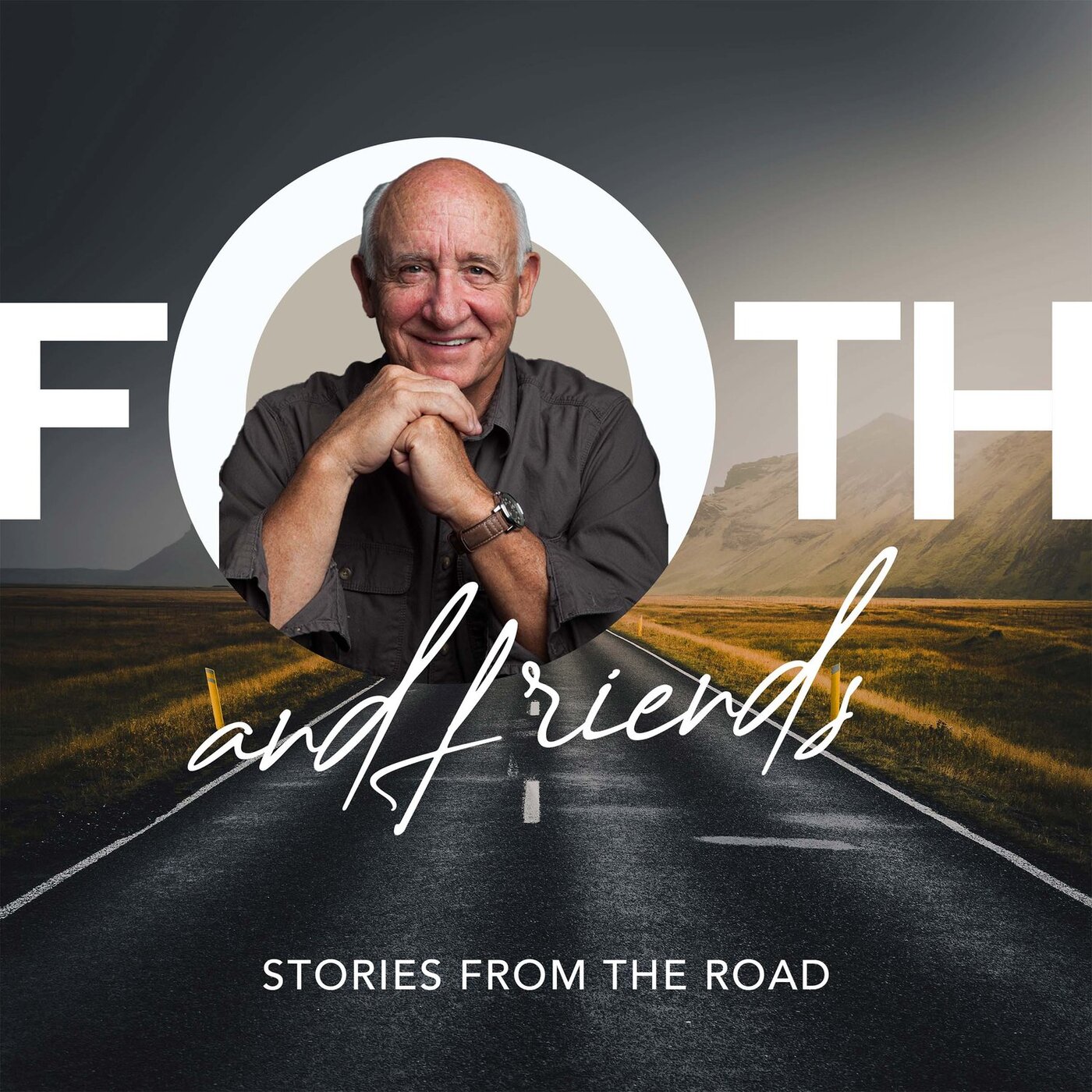
Stories from the Road starts in Coonoor, South India in 1946.
We continue our conversation with Kristin Orphan with Finally Home (https://FinallyHome.net).
Then we go back to National Community Church in Washington D.C. as we talk about the story of Charles Greenaway.
It was the coolest train in the world. It had open windows, steam engine. It was called the Nilgri Express. Express was an overstatement. Its top speed was 9 miles per hour. And it went from the South Indian town of Metapolian up to the South Indian town in the hills at 6,000 feet in tea plantations called Kanur. And Kanur was a British boarding school. Sort of a colonial thing back in the day. During the days of the British Raj in the 1940s. The final days, if you will, of the British colonial impact on India. And I was four going with my parents and my sister to this boarding school where I would stay for nine months out of the year. Away from parents. We wouldn't be with family. It would be a good place, wasn't a terrible place. But it wasn't family. This is Dicphoth with stories from the road. And I'd like to move from 1946 to this year, to 2023, and come to the second part of family as a theme in these podcasts. A family, by definition, is a group of one or more parents and their children living together as a unit. Or all the descendants of a common ancestor. It fascinates us. There are television programs about such things. Who is your family? Can you trace them all the way back? If you watch PBS at all and see Dr. Lewis Gates talk about finding your roots. There are lots of programs like this. Question is why. Why is family such a pivotal part of the human experience? Scripture in the New Testament particularly talks about the family of God with this fascinating phrase that we in following Jesus get adopted into it. Let me just chat for a moment about what makes families such a vital aspect of human life. First of all, it's about identity and belonging. I mean, it's who we are in a family where we come from, what we stand for. It gives us connection and support and self-esteem and confidence and purpose. And families teach us how to behave and what to expect in life. You know, there are family rules that are never written down, right? They're not on their refrigerator. You just learn them as you go along. You learn hopefully moral values and ethical principles of life that guide our actions and decision making. And also we can get this sense of responsibility, respect for others, stability, continuity. I mean, it just goes on and on and on. We learn how to handle conflict hopefully with people and help with listening skills. It's a fascinating thing to listen to people's stories of what kind of family they grew up in. Because it helps you understand why they are like they are. Like why I am the way I am. Last time we were together introduced you to a friend, Kristen Orphan. And Kristen and her husband lead an effort called Finally Home again. And we'll hear more about this in the weeks ahead. But I asked her about how they got into this and how their families were alike or different. And here's what she said. I did grow up in a nuclear family that is loving. And I have a wonderful experience. And family is a value to me. I married my husband 31 years ago and he did not have a great story. And so he was someone who had a broken family and the church really stepped up during some painful times. And his perspective on family was wider than mine. I would say that whether we stated it or not, we had a value in my family if you take care of your own. Whereas my husband Mark was the recipient of people beyond the family really in the family of Christ stepping in. And he had this idea that when he built a family, he would like to adopt. Have children biologically, if it's God's will, and then adopt. And that was really new concept to me. But I was not opposed to it, just very important. So when we think about family, and we think about the scenario today across the country, around the world, foster care when families don't work well, foster care happens. Adoption happens. And those things are not bad. They're not the same as a biological family. But they can be so profoundly positive. And the intent of the action of fostering or adopting is profound. It's good. I think it pleases God, if I can go that far, for people to reach out and take into their lives. People who are connected not by biology, but because their hearts are together. The whole idea of being, quote, orphaned, unquote, has a scary aspect to it in some way. I mean, all homes have challenges. There's a spectrum, right? You have biological homes that are wonderful, and you have biological homes that aren't hardly homes at all. They're fractured. Every home has some, what we would call dysfunction. Old parents have struggled at times. We've never done this before. And parents can separate emotionally and physically and sometimes homes break. Mind it. As an adult, I felt it. My parents separated when I was just married at 21 years old. And even as an adult child, I felt that loss. And that can be scary. Because you think, well, maybe it's embedded in me, or maybe it's a DNA thing, whatever. I chatted with you last time about being in Washington DC in October. And I had a chance to share a story with a group of folks about my friend Charles. Charles knew about being scared when he thought his family was coming apart. And here's a spoiler alert. This story has a tough start, but a good ending. My friend Charles Greenaway, brought up in the coal fields of Pennsylvania, was a terrific guy. And I loved listening to him because he was one of these quintessential Scott's Irish storytellers. And when he listened to him, it just was very moving for you. But here's the story I shared in DC. Charles Greenaway was born in the coal fields of Pennsylvania back in the teens or 20, something like that. And he was during the Depression years, and he went on to be a missionary in Africa in other places, but he was an incredible storyteller. You talk about how do you learn to tell stories. He was an incredible, when you listen to Charles Greenaway, you need to hang on to your heart and hang on to your wallet. Because he's going to take both of them. He's going to go save some, you know, feed kids overseas. And he was just that kind of a guy. But he had a tagline that he used all of his life. And we met him when he was in his 50s or 60s. He had a tagline if you say, Charles, how you doing? And he would say, I'm going to make it, both. Not going to look like much when I get there, but I'm going to make it. And one day I asked him, where did you get that line? Where did you get that thought? He said, well, it came out of the Great Depression. During the Great Depression in the coal fields of Pennsylvania, my daddy died. And there was one other brother in me. And he said, I'll never forget standing beside my mom. And my dad's body was laid out on the table in our house, which is how they used to do such things. And he said, I'm five years old and I'm scared out of my mind because I don't know what's going to happen. And during the Depression, oftentimes, people with children, especially if they had larger families, could not feed them. And they would sometimes send them to state orphanages just because there was food and shelter and that sort of thing. And Charles said, I was just so frightened about that happening. But my mom said, Charlie, don't you worry, it's going to be okay. We're going to stay together. I'm not going to let anything happen to you. But he said, within a year, something happened. Somebody got to her something. And one day she told me, I'm so sorry, Charlie. But just for a time, I need to send you to this orphanage. And he said, and the lights went out, and the bands stopped playing, and the birds stopped singing. I was devastated. And I'll never forget the day standing as a little five-year-old around the corner of our small house. And the Black Model A pulled up, and the guy, big guy with a big cigar and a derby hat, bowl or hat, got out, walked in through the into the yard, and looked around and said, well, where is he? Like I was a piece of meat or something. And he said, I was so scared. I went out and I stood before my knees were knocking together. And all of a sudden I felt the warmth of my mother's body beside me, and she put her armor on me around my shoulders. And she said, Mr. We've changed our mind. Charlie ain't going. And he said, and the birds started singing, and the bands started playing, and the lights came back on. And she said, he ain't going because we're going to make it. And from that time on he said, I'm going to make it. Ain't going to look like much when I get there, but we're going to make it. I love that story. We would want every child, every foster child, every adopted child, to be able to say throughout their lives. I'm going to make it. I've had birds singing in my life, and bands playing, and it's a life lighted up with good things as well as struggles. How could that happen? Why might that happen? Because somebody chose me to be in their family. They invited me to be one of theirs. And their family became my family. That's it for this time. So glad you're listening. Thanks for subscribing on whichever platform you listen on. And we'll be back next week, because we approach Thanksgiving this family time with great hope. God bless, catch you later.