

 Apple Podcasts
 Spotify
 Youtube Music
 Thoughts on Thomas Jefferson and His Town (Part 1)

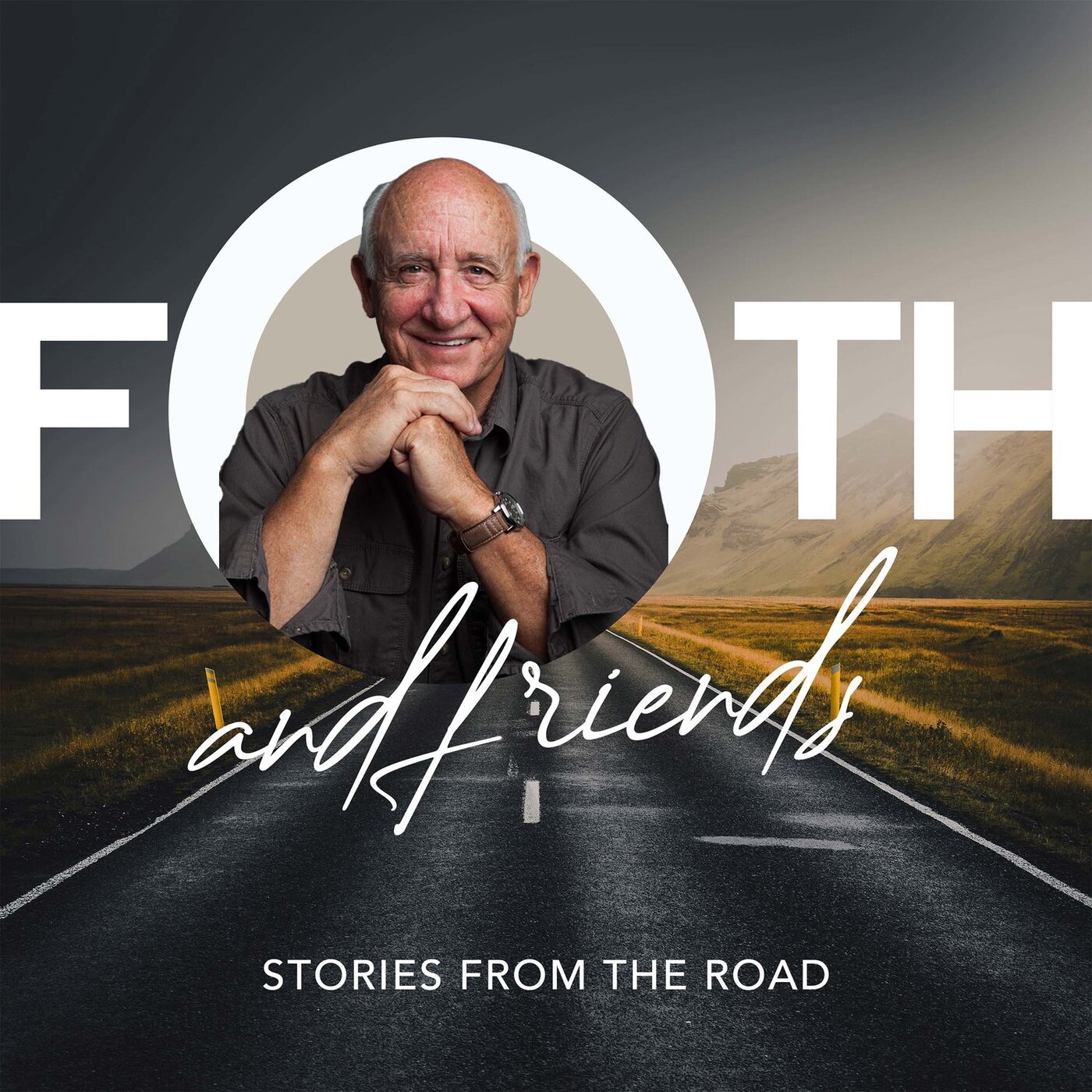
Hello, I'm Dick Foth, and I'd like to welcome you to known stories to make sense of it all. These stories are what I call walking books, real-life people, different places, different ages, different cultures, and I want to have some conversations with them across disciplines and generations and cultures in order to encourage a kind of knowing fresh lenses through which to see the world. One of those lenses will be Scripture, or more specifically, Jesus of Nazareth, whose life I believe changed the course of the history of the world. So thanks for listening in. Great to have you with us. It is Fall 2018, and we are on the cusp of midterm elections. What a better time to do some history. For this podcast, I want to take us back to the roots of the Republic. I'm on the East Coast for this conversation in the great state of Virginia. I'm with a couple of friends, and these friends both come from business corporate families in New Jersey, but they settled in Charlottesville, Virginia. One became a businessman, the other became a pastor, these two gentlemen I'm speaking with, and I just find this particular conversation fascinating, not only because of who I'm speaking to, but the conditions were a bit blustery and windy that day in the springtime in Virginia, and there were schoolchildren around, and so you really have to listen up for this one, because there's a lot of ambient noise, but it's real life. So here we go. I'm standing on the portico in the portico of Monticello, Charlottesville, Virginia, the home of Thomas Jefferson. If you look on the back of a nickel coin, you'll see the building. That's where we are. And I'm here with two good friends, Peter Hartwig and Peter Sorenson, who live here. Boys say hello. Hello there, I dick. And Peter and Peter Hartwig and Peter Sorenson have been in this area for a number of years, a bunch of years, and but both of you grew up in another place. I'm going to call you Hartwig and Sorenson, just so our listeners have a chance. That'll work for us. Where did you grow up? So I actually grew up on a farm in Nina, Wisconsin, and then in my teenage years ended up in New Jersey. Okay. I grew up in Morstown, New Jersey, dick, where my dad worked on Wall Street, and I was raised. Okay. So you got a Wall Street dad. Your dad was in. My dad was a corporate exec in the pulpen paper industry. Okay. And now here you are in Charlottesville, Virginia. By the way, it's raining. We got school kids running around. So this is real life. It is springtime, by the way, in March, Illinois. I can look across the lawn and see tulips and flowering dogwoods and it's spectacular. And it's just the place to be on a wonderful Saturday afternoon. So here we are in Jefferson's home, this unique place where he used every square inch. He was a farmer. He was a mathematician. He was a politician. What else did he do? Well, he was also an architect. He drew the house and he had it built. Okay. And he was an architect for our country, our government. What did he do? Well, he wrote the test. Is it test for all of you listening? Well, he wrote the Declaration of Independence, which is a beloved document literally around the world. Governments around the world have been founded on that document. So when he built this, he talked a couple of his buddies into coming here. Is that right? I mean, in terms of living, not far away. That's correct. He had two very close friends and politics. And they actually all wanted to live near each other. One day's stage coach ride away was the goal. And they actually achieved that goal. Yeah. So James Madison and James Monroe were both his dear friends and neighbors. Isn't that is it? Did we hear on our little tour today that the daughter or granddaughter named her children after those. Correct. So James Madison Randall. That's right. Monroe Randall. Yeah, that's right. That's right. This is my curiosity. How far as a stage day, a day stage coach? Well, the what's ash lawn is right past Monticello. So that's within within 10 miles. Yeah, way within 10 miles. And then the name of the other house is Montpelier. Montpelier. And that's that's oh, that's quite a waste for that's all for a little bit. That's probably 25 miles from here. Something like that. Yeah. Here we are in a place that is a redulent with the roots of liberty. If I could be so. That's true. That's poetic. Very true. And yet when he died and they had to sell off part of his estate, 130 slaves who sold how do we how do we put this together? This this good man with a good man in the sense of good thinker. He was a son of the Enlightenment, if you will, all of these things. And he was not necessarily a person of faith particularly, but he respected people of faith. Is that do I have that right? You do. No. I mean, even as you look through his home, there are pictures that different Bible scenes in his home, which are pretty amazing. But if you read the Jefferson Bible, it ends with them rolling the stone in front of the tomb in every picture he has in his home that is faith-based is before the resurrection. Nothing after. And he took the miracles out of the God. He did. That's what he did. So you have this complicated man. That's right. I know a lot of people like that. Well, I think all of us are pretty complicated. So let me let me talk about let me go back to here's this person who's a thinker and explorer intellectually and govern mentally and agriculturally and all of this stuff. But he he doesn't call up his two buddies, but he talks to his two friends and says and he did it be within a day's stage coach. That's right. Why do you think he would do that? There's little doubt that Jefferson was a people person. And even after he retired as president, Monticello saw literally hundreds and hundreds of guests that would come up here to sit at his table. And it's very obvious that Jefferson loved people and he valued relationship highly. Well, and his two close friends here obviously ended as president as well. And so he obviously felt like he was he needed to have a hand in the formation of the government and the continuation of the American government. So you felt responsible I think in that way. So talk to me just a bit about friendship. As you know, this idea of friendship is sort of central to how Ruth and I have thought about things for a long time. What does what does friendship do? Well, first of all, how did you guys meet? You're both here in Charlottesville now, but sure. Well, I've served as a local church pastor here at City Church for the past 20 years. Okay. And about 10 years ago, Peter and Victoria Sorenson literally in a lot of ways just walked into my life. Being that I had been at Princeton and then Peter had been from New Jersey. We had a lot of commonality. And so when he kind of showed up at the church, we became very fast friends. So you became fast friends. Yes. Sorenson, tell me, you're a businessman. He's a pastor. Tell me why you like him. Well, I think Pete Hartwig is a very unique pastor. And I've grown up in the church. I was an infant in the church. And I've met so many pastors who are deer and literally beloved friends. But the ones that I've been so close to and most close to have been ones that have wanted to impact their community. And that really is Pete Hartwig. Here's a man who almost spends no time in a church office and spends every day out in the community having lunch with people, sitting in coffee shops with people, just conversing and bringing ministry to the street. And that's where my heart is. I want to impact my world. I don't want to just pass through and you know, end up in a grave somewhere, having not touched those around me. A lot of times in a community, the people who get, quote, left out of these kinds of conversations. Yes. Oftentimes are the people who are what we might call high end people. We call them the 1% right? 1% is that those folks who have made it in other people's eyes. But oftentimes that making it puts you out in an ozone layer where you don't have relationships. And sometimes guys like you Hartwig are afraid of people like that because they got resources and all that kind of stuff. Sure. Why aren't you afraid of people like that? Well, one of the reasons was I served as a chaplain at Princeton. So if I was afraid of them, I probably wouldn't have done much. But no, I think coming here to Charlottesville, my children, we felt led to enroll my children in an elite prep school here in Charlottesville. What I found out very quickly was there was no chaplain at the school. And I think my son was the only one who had faith in his entire grade. And so being there, we began to have a heart for these 1%ers who really had no faith at all. They weren't willing to go to church. And that's when Peter Sorenson kind of walked into my life 10 years ago. And he had done ministry on Wall Street with executive ministries and his father really kind of paved the trail for him along those ends. And so then Peter, you and I met 10 years ago and we kind of sat down and began to look over the landscape of Charlottesville and we began to talk about what we would do. Yeah, I mean, Art and Nancy Damoss had a very vibrant ministry outside of Philadelphia. And they termed their neighbors the up and outers rather than those who were down and out. How long ago would this be? This was 30 years ago plus or minus. They would have a dinner in their backyard for 1,000 people. Holy cow. And so Art Damoss, they're extremely wealthy people. And people have told me that at the end of these dinners that they would do, they would give him their name tag if they responded if they wanted. And he was almost begging people as they were leaving. Please, so tell me they wanted. So if they wanted to have a discussion on faith that they wanted to learn more about Bible or Jesus or just anything of the journey, that's that helped facilitate that process. And he and he and his wife were unashamed. I mean, they were very bold in their faith. And so I was actually emboldened by that and by the ministry my parents did. And so at the end of the day, you know, you really have to think through what is most important is that your image in the in the culture in the community or is the fact that you represent Jesus and you may be that one person to minister to these individuals. So here we are in Charlottesville. Yes. Last evening, I went with you to the country club and a couple of hundred folks, the couples there and you had advertised this thing about Keyes to marriage or whatever it wasn't. I've had the privilege of being here before, but I always tell the people, folks here, you know, I'm a kid from East Oakland, California. I'm not a blue blood. I wasn't raised, and I didn't graduate from a real name school and all that sort of thing. So for me, over the years, to sort of learn how to engage folks in a different in a different strata, I think it's heard. That's fair. Yes. It has been more of a challenge. But to see you guys just naturally move about and do stuff, it's just a hoot. I really like that. And this idea of the faith and leadership forum, part of it, I think this is correct, was part of it sparked when you came to the national prayer breakfast some years ago. Absolutely right. And you brought your chief of police from here. That's right. And then from there, you said, okay, how do we how do we add to this? Right. That's very accurate. So Dick, you invited my wife, Fran, and the two of us went with Chief Longo and his wife. And I remember coming back from that, just looking at the national prayer breakfast, I humbly felt like it was the best of angelistic outreach I'd ever seen in my life. And I've seen a lot of them. And so coming back, but they don't see it that way. They don't see it as sort of like this not a Billy Graham. No, not even the least. I mean, it was all relationally driven. It was really kind of the modality of ministry that suits me well. And then coming back, begin to pray about it. And not long after that, Peter and Victoria Sorenson kind of strolled into my life. Peter had a history with the 1% and that was sort of the area I felt uniquely called to. And so we kind of teamed up. And what we did originally, we brought in a vice president of Disney and had him give just to talk on faith and work. And we've probably had about 100 plus people that just came to hear about that. We went into our Rolex and found people that we knew were outside of faith. And our agreement was we would have a three week follow-up about Jesus. What does that mean? Well, they listened to Al Weiss and there were cards on the table. And if they Al Weiss's the Disney guy. Yes, exactly. And so what ended up happening was if they filled out a card, we would meet with them for three more weeks, talk about Jesus. And we're now into our year number eight. We're into year eight. So three weeks grew into eight years of this. Yes. And you guys meet. And now there are men's and women's meeting groups that have organically grown out of that effort. Yeah, people meet essentially to talk about the journey. At that moment, by journey, I understood that to be if there is a God, is he real? How does that affect my life, my relationships, my career, my view of the world? And so I just pose the question to them. Do I have that right? You do. And so that one group has now grown into five groups. Three of them are men's groups, two are women's groups. And I can tell you the most typical response we have gotten is a man and heard one recently, a man who said, you know what? I grew up in a church. I have never heard any of this. And I'm going to have to rethink my entire life. And it's all to the positive because we've opened doors that he's never had opened in his heart. So when you say I've never heard any of this, what is this? Well, the fact that Jesus, the Christian faith is something that is not only true, but it's normative in something that informs every other area of life. For a lot of people who've grown up in a cultural faith, it's really just a Sunday exercise. And it's a polite exercise and you come to church with your suit on and you greet your peers. And that's it. And it ends on Sunday. You walk out of the church. That's the end of it. And what we've told these people and Pete has done a masterful job of teaching is that Jesus touches every area of your life every day, every hour of every day. So you're doing this as friends. We are. Very much so. In fact, our families are extremely close. We vacation together. I'll come out and his daughters will be asleep in a room in my house, vice versa. So we've just become extremely close friends. Well, this is generational too. It is very much so. I'm going to call another member in. This is Peter Hartwig. The second, I call him Peter the tooth and say hi to the friends, Peter. Hello, friends. There they are. They're my friends. They're your friends already. Look at them all. And Peter is healthy, 22, 22. So you've lived hardly any of life. Very full, hardly life. But I had the privilege of meeting Peter few years back when he was younger than 22. And we've become friends. He's accepted me as a 75-year-old whatever. But Peter, you've watched this, what I've just described. Now you've just graduated from University of Virginia. You're going to Cambridge in the fall. So you're going to go over there to be British and learn deep thoughts and all of that. But you've watched this, this friendship, you've watched this engagement in the city and around. What are your thoughts? Just toss some out there as to how you assess it. How it's impacted you? Yes, at all. Well, I think, so I've had, I was told that the most you'll change in life are the first six months of college and the first six months after college. And most of my friends, they're first six months after college. I've been working a bajillion hours a week, consulting in DC or they've, they're trying to use their history degree or something. And I've had the weirdest first six months after college of anybody. I know I hang out with 50 to 70-year-olds, three mornings a week, any breakfast. You're strange. I'm not guy. But odd guys make great fake grandkids evidently. So, at that point, we got interrupted by a group of folks. I think it was, I think there was a squall and they came into the portico at Monticello where we were standing. And so we had to sort of abbreviate the conversation. What we're going to do is we're going to pick up that conversation in our next podcast. So, hold that thought about a young guy working with older guys. And what that means for the cross-generational conversation about life, about faith, and anything else they want to talk about. So we'll see you then. This episode is brought to you by Progressive Insurance. Do you ever think about switching insurance companies to see if you could save some cash? Progressive makes it easy. Just drop in some details about yourself and see if you're eligible to save money when you bundle your home and auto policies. The process only takes minutes and it could mean hundreds more in your pocket. Visit Progressive.com after this episode to see if you could save. Progressive casualty insurance company and affiliates, potential savings will vary, not available in all states.