

 Apple Podcasts

 Spotify

 Youtube Music
Thanksgiving: The Day After (Reprise)
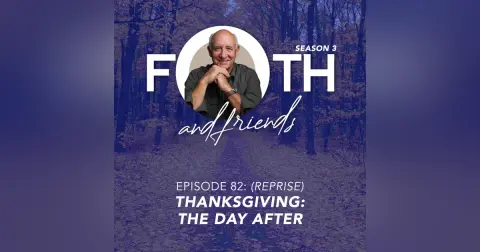
It’s Thanksgiving week, and Dick Foth is on his back porch in Colorado, cool enough to see his breath, under blue skies. This week he brings back a favorite episode of Stories from the Road from Thanksgiving week 2023: Thanksgiving: The Day After.
Dick starts with why Thanksgiving may be the best holiday of all. There are no presents to buy; you just bring yourself (and maybe a pie). He remembers childhood drives from Oakland to his grandparents’ home in Dinuba, near Fresno. There were tree frogs in jars, biscuits and honey, and his grandmother’s homemade pineapple ice cream frozen in old ice cube trays.
Then he asks a bigger question: why does our country have a national Thanksgiving at all? The answer starts in September 1863. Magazine editor Sarah Josepha Hale, then 74, wrote to President Lincoln and urged him to make Thanksgiving a national holiday. Just weeks earlier, the Battle of Gettysburg had left about 50,000 casualties in three days. Nurse Cornelia Hancock wrote that the town was “one huge hospital.” Lincoln answered Hale with a proclamation. That November, families in Gettysburg sat down to give thanks while the smell of death likely still hung in the air.
Dick says that’s the point: thanks are easy when times are good and even more needed when times are hard. Thanksgiving “swims upstream.” He closes with Philippians 4 and an invitation to give thanks wherever you are this year.
In this episode:
- Why Thanksgiving is the holiday where you “just bring yourself”
- Childhood memories of Leonard and Louise Foth’s home in Dinuba, California
- Sarah Josepha Hale’s 1863 letter to Abraham Lincoln
- Gettysburg, Cornelia Hancock, and the first national Thanksgiving
- Why gratitude matters most in hard times
References Mentioned
- Scripture: Philippians 4:4–7 (NIV) — “Rejoice in the Lord always… do not be anxious about anything…”
- Sarah Josepha Hale — editor of Godey’s Lady’s Book; her letter to Abraham Lincoln is dated September 28, 1863
- Abraham Lincoln, Proclamation of Thanksgiving — October 3, 1863, setting apart the last Thursday of November
- The Battle of Gettysburg — July 1–3, 1863, Gettysburg, Pennsylvania
- Cornelia Hancock — Union volunteer nurse whose letters from Gettysburg were later published as South After Gettysburg: Letters of Cornelia Hancock
- First national Thanksgiving — Thursday, November 26, 1863
- Dinuba, California — the Central Valley town near Fresno where Dick’s grandparents lived
- Original episode — Thanksgiving: The Day After, Stories from the Road, Thanksgiving week 2023
0:06 Well, Happy Thanksgiving to all of you. This is Dick Foth with Stories from the Road. And here I am, Thanksgiving week, on my back porch crisp enough, cool enough out here to see one's breath. Spectacular blue skies in Colorado this day. I don't know where you are, but we're hoping you have a spectacular time around the table. And I'd like to do a reprise, actually, from three years ago called Thanksgiving the Day After. And so what you're about to hear comes from Thanksgiving week 2023. Enjoy. God bless. Hello friends.
0:53 We are on approach to Thanksgiving Day and it's a grand celebration, isn't it? People say that it's the most traveled week in the year. I think the statistics, the stats, show that the Tuesday and Wednesday prior and the Sunday after are the most heavily traveled, both on the roads and by air. I think Thanksgiving week is the funnest, if I can use that word, of the holiday season. Because at Christmas you're trying to figure out how do I get presents there and who do I buy what for and are we doing this online.
1:35 And Thanksgiving you just, you don't bring presents, you just bring yourself and maybe a pie. This is Dick Foth with Stories from the Road. I'll not soon forget as a young boy in Oakland, California, driving the several hours from Oakland, which is on the coast of California by San Francisco, into the interior, what they call the Great Central Valley, near Fresno. There's a little town called Dinuba, and that's where my paternal grandparents lived, Leonard and Louise Foth. Little home with little backyard with roses attended by my wonderful grandmother and we caught tree frogs there and I tried to take them back to Oakland in a jar but they never quite made it.
2:29 But I like going there because there would be biscuits and what they called miner's honey. They had orange orchards around that area. And my grandmother would make in the old ice cube trays before you had automatic ice dispensers. Some of you would remember ice cube trays. She would, I think, mix cream or something with pineapple and it would be homemade pineapple ice cream. Still my favorite. Thanksgiving is an interesting moment in our history. And so I asked the question, why have a Thanksgiving Day in our country? And there's a fascinating story, I believe, that goes with that.
3:12 We had days like back in the 1600s, Plymouth and up in New England, and then later on with George Washington and others. where a day would be noted, usually around harvest, for Thanksgiving, the giving of thanks. Some states adopted such times. But September 28, 1863, a 74-year-old magazine editor by the name of Sarah Josepha Hale sent a letter to President Lincoln urging him to have the day, quote, have the day of our annual Thanksgiving made a national day and a fixed union festival, an American custom and institution.
3:58 Interestingly, Lincoln responded to Mrs. Hale's request. Apparently, she had written other presidents with no response at all, or other people. The timing is stunning, actually. She wrote the letter September 28, 1863. Two and a half months earlier, first week of July, Gettysburg, Pennsylvania, that town that sits by car today probably an hour and fifteen minutes north-northwest of Washington, D.C. One of the biggest battles of the Civil War, the turning point really, happened there outside Gettysburg.
4:42 Confederate troops versus Union troops, 160,000 soldiers, And three days later, in that first week in July, there were 50,000 casualties, more than 7,000 dead in three days of fighting. It was a horrific scene and the consequences were horrific. The Days and Weeks and Months that Followed. In the aftermath of the battle, Nurse Cornelia Hancock, a visiting nurse trying to help with the wounded, writes to her cousin that there are no words in the English language to express the sufferings I witnessed.
5:23 The country is very beautiful, rolling, but contrasts to the awful smell of putrefaction. With that as a backdrop, Thirty Days After Her Letter, Lincoln, in October of 1863, wrote a proclamation of Thanksgiving. So you have the sequence. First week in July, this horrific battle. Later in September, the last week in September, Sarah Josepha Hale writes her letter to President Lincoln. And within 30 days, Lincoln does this proclamation, We have gracious gifts of the Most High God, who while dealing with us in anger for our sins, hath nevertheless remembered mercy.
6:09 I do therefore invite my fellow citizens in every part of the United States and also those who are at sea and those who are sojourning in foreign lands to set apart and observe the last Thursday of November next as a day of thanksgiving and praise to our Beneficent Father who dwelleth in the heavens. Back in July, Nurse Cornelia Hancock had written, Gettysburg is one huge hospital. This is post-battle. 21,000 wounded Union and Confederate soldiers were left on the battlefield. Hardly any painkillers. She said, The stench of death lingered in the air for weeks.
6:53 It could be smelled for miles. One month after the proclamation, You have our first national thanksgiving. Think about it. First week in July, horrific battle. Stench of death lingering for weeks and months, if you will. September, a lady writes a letter to the President. October, the President makes a proclamation. And within a month of that, a family, pick any family, in Gettysburg sits down to a meal thanking God for life. with quite possibly and probably the smell of death in the air.
7:37 And I say, what is that about? Well, thanks are always needed. Thanks are easy if times are good, even more when times are hard, however. Thanksgiving swims upstream. Philippians 4.4 Paul writing to people who were oppressed under the thumb of Rome reads like this Rejoice in the Lord always. I'll say it again, rejoice, let your gentleness be evident to all the Lord is near. Here's the part, do not be anxious about anything, but in every situation by prayer and petition with thanksgiving, present your request to God.
8:24 The peace of God which transcends all understanding will guard your hearts and your minds in Christ Jesus. As we approach this Thanksgiving Day tomorrow, Wherever you are and whatever your circumstance, there are things for which to thank God. There are some horrific things going on in the world, other places, and we here in the United States are only touched by that in some small way, relatively speaking. We need to pray for those in peril and we need to give thanksgiving to God for the privilege of one being able to do that.
9:10 But secondly, just for this moment in time, I'm grateful for you today and pray you have a great time with friends or family tomorrow, wherever you are in this country or around the world. Well, here we are three years after the recording of that particular podcast. I hope you still have a grateful heart. I have a grateful heart. As we say where I come from, I'm alive and grateful. That's how it works. God bless. Catch you later. Bye-bye.